

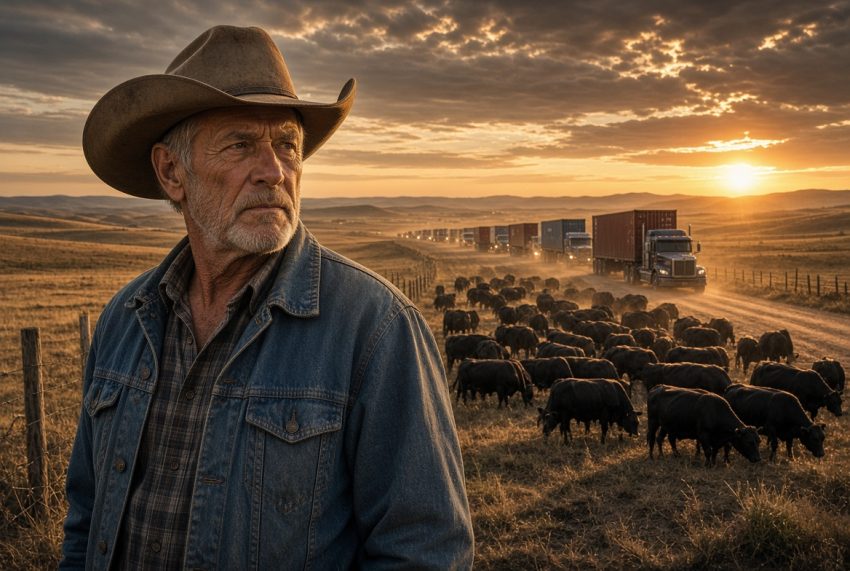
Tucker Carlson sat down with Joe Maxwell, Missouri farmer, former lieutenant governor, and Rural Independence Initiative co-founder, to examine the crisis hitting US cattle producers. The talk focused on recent moves to sharply boost Argentine beef imports, the power of a few dominant packers, and why ranchers keep losing ground even as grocery prices stay high.
The administration announced plans that will bring in more than 750 million pounds of beef in about 90 days, including 80,000 metric tons already purchased from Argentina. That volume tops a 50 percent jump over recent monthly import averages. Officials framed the deals as help for Argentina rather than relief for American shoppers. Maxwell said the timing undercut ranchers who had only just started seeing profits again. Cattle markets dropped right after the news. He noted geopolitical ties and large financial packages for Argentina, yet stressed that US policy must put American producers first. About 63 farmers a day are quitting while families still struggle to afford food.
Maxwell pinned the core problem on extreme concentration. Four companies control roughly 85 percent of US cattle slaughter. Two are Brazilian-owned, led by JBS, the world’s largest meat protein firm. Similar dominance marks pork and chicken. A handful of big retailers control most grocery sales. Ranchers pay whatever input suppliers charge and take whatever packers offer. Higher shelf prices rarely reach the farm gate. The middle captures the margin.He used the recent egg price spike as an example. Flocks fell only 6 to 7 percent, yet retail prices soared and the top producer’s profits jumped roughly tenfold. USDA economists expected new competitors to force prices down. None arrived because the market is locked up. Maxwell argued real capitalism needs competition. Without it, a few firms extract wealth from rural America. Both parties have let this happen for decades by weakening antitrust rules and allowing heavy lobbying.
Maxwell detailed JBS’s record of bribery in Brazil, its US expansion, and close ties that include major political contributions. He recalled the 2017 Brazilian tainted-meat scandal. Other countries shut borders in days while the US waited 97 days. The top US meat inspector at the time later took a senior food-safety job with a JBS affiliate. On the current Argentine shipments, China recently rejected some product over residues of a powerful antibiotic banned for livestock in the US and elsewhere because it lingers in meat and drives resistance. Maxwell urged strict testing.
America still lacks mandatory country-of-origin labeling for beef. Shoppers will not know if the new imports end up in their ground beef. A voluntary “Product of the USA” standard now requires animals to be born, raised, slaughtered, and processed here. Regional packers are more likely to use it. Maxwell urged consumers to seek that label and press stores to stock it. He also backed bipartisan efforts to restore mandatory labeling.
The imported volumes will mostly supply lean trimmings for grinding and processed products rather than steaks. Maxwell called for stronger competition rules, an end to the revolving door, and clear labels so American ranchers and consumers are no longer the ones paying the price.
