

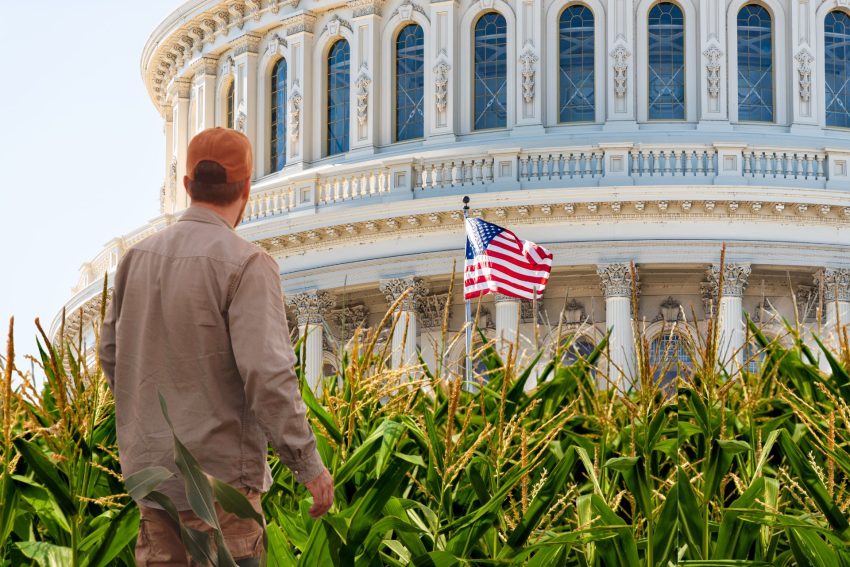
You got up before the sun. You checked the cattle in a freezing wind. You planted when the window was two days wide and the forecast was a liar. You ran the combine until midnight because rain was coming and the crop would not wait. You produced food by the ton. You did your damn best. And at the end of the year, the books still do not work.
That is not a character flaw. That is not a failure of faith. That is not proof that the neighbor down the road is smarter than you. It is what happens when the people who write the rules choose conditions that bleed a working farm dry.
Farming is one of the few trades where you can do everything right and still go broke. Weather can wreck a year. Markets can wreck a decade. But weather and markets are not the whole story. Input costs do not float down from heaven. Trade rules do not write themselves. Cheap imported beef does not walk across the border by accident. Those are choices. Someone made them. Someone keeps making them.
Look at diesel. Right now, harvest is rolling, and on-highway diesel has been sitting near record territory, with a national average around $5.94 a gallon and plenty of farm country seeing prices that flirt with $6. It’s all thanks to the war in Iran. A combine that drinks 100 to 150 gallons in a day does not care about a speech in Washington. Fuel is not a line item you can skip. You either take the crop out or you lose it. When diesel jumps like that, the extra tens of thousands of dollars do not come out of some abstract “farm sector.” They come out of your operating note, your kids’ college money, and the thin margin you were counting on to stay solvent.
Look at trade. Tariffs and trade wars are sold as toughness. What they often deliver is a farm that pays more for steel, parts, fertilizer, and equipment while the crop it grows gets locked out of a market it used to have. Then the same political class turns around and opens the gate for product that undercuts you at home. That is not a mystery. That is a stacked deck.
Look at beef. Independent ranchers have been told for years to rebuild the herd, hold heifers, and wait for the cycle to turn. Then policy arrives that expands tariff-rate quotas and waives the out-of-quota tariff on hundreds of thousands of metric tons of lean trimmings so cheaper imported grinding beef can flood the market in the name of grocery-store politics. Packers and importers can live with that. A family that sells calves once a year cannot. You did not choose that. You are living inside it.
Look at scale. Massive agribusiness gets the contracts, the lobbying shops, the tax treatment, the logistics, and the patience of lenders. Family farms get lectures about efficiency. Consolidation is treated like weather: inevitable, natural, nobody’s fault. It is not weather. It is policy plus market power plus a food system built to move volume through a handful of firms. When the small and midsize operation disappears, the press calls it “the changing face of agriculture.” The family that lost the place calls it the end of a name on a mailbox.
This is why there was a tractorcade. In the late 1970s, farmers with the American Agriculture Movement drove thousands of tractors toward Washington because prices would not cover costs, land values were collapsing, and banks were lining up at the courthouse steps. They did not go to the National Mall to ask for a pep talk. They went because they knew the squeeze was political. Parity. A fair price. A chance to stay on the land. They understood then what too many people still refuse to say now: you can work like hell and still lose if the rules are written for someone else.
And after all that, some of the same voices that designed the squeeze have the nerve to sneer at “government handouts.” Crop insurance, disaster aid, and farm-bill payments did not appear because farmers are lazy. They appeared because the market that farmers sell into is not a free market in any honest sense. You buy retail and sell wholesale. You take world prices and local weather. You cannot pass a $6 diesel bill to the elevator the way a corporation passes a cost to a customer. When the check comes, it is often the only thing standing between another year and a sale bill. Calling that a handout while quietly protecting the firms that capture most of the food dollar is not fiscal virtue. It is a con.
Do not take that con into your own head. Do not decide that you failed the land your great-great-grandparents tilled. Do not decide God is punishing you because the corn did not pencil. Do not take it out on the neighbor who is hanging on by the same thread. He is not the reason diesel is high. She is not the reason imported product showed up in the case. The guy across the fence is not the packer, the speculator, or the committee that wrote the bill.
Your anger belongs with the people who chose those conditions and then told you to be grateful.
This is not a sermon about Democrats versus Republicans. Both parties have spent decades trading favors in a system that treats food as a cheap political tool and farmers as a constituency to be managed. One side fleeces you with a smile and a grant program. The other fleeces you with a flag and a tariff speech. The point is not which team gets the next turn. The point is that the whole arrangement is built to extract work, risk, and land from the people who actually grow the food, then concentrate the profit somewhere else.
That weight is not abstract. Farmers die by suicide at rates far above the general population. The National Rural Health Association and CDC occupational data have put that risk at roughly three and a half times the average. Isolation, debt, a culture that treats asking for help as weakness, and the terror of being the generation that loses the farm all pile onto the same person. If you are reading this in the cab and the numbers will not add up, hear it plain: the farm’s trouble is not proof that you are worthless. It is proof that the system is extractive. Stay. Call someone. The 988 Suicide and Crisis Lifeline is there. So is a neighbor who has been staring at the same ledger.
You have been playing the game as well as it can be played. You adapted. You got bigger when they said get bigger. You got efficient when they said get efficient. You tracked basis, bought insurance, fixed what you could fix, and still watched the floor drop out. That is not incompetence. That is a rigged table.
Keep the farm if you can. Sell if you must. Ask for help if the darkness gets too loud. Just do not accept the lie that this is your fault. You grew the food. Other people chose the terms. Those are not the same thing, and they never were.