

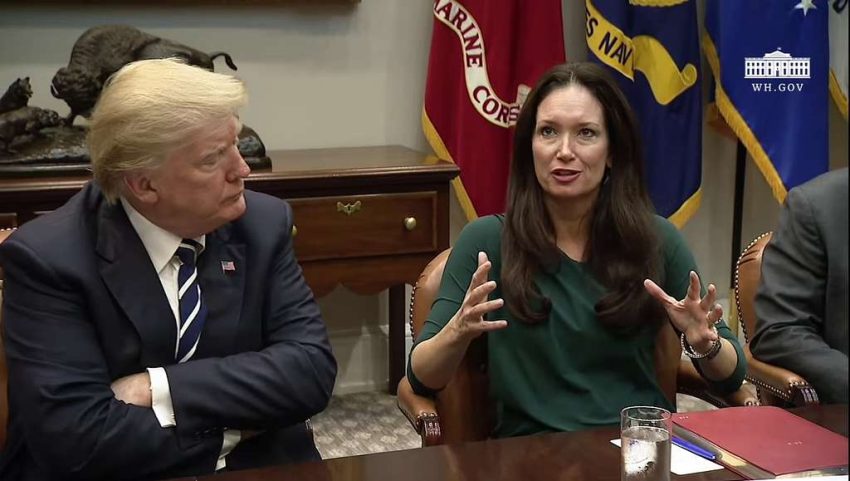
With the November 3 midterm elections less than three weeks away, President Donald Trump’s job approval has fallen to a record low of 33 percent, with 66 percent of Americans disapproving and 52 percent strongly disapproving, according to a Washington Post-ABC News-Ipsos poll of 2,545 adults conducted October 9-13. Economic approval sits at just 28 percent. A separate Fox News poll put overall approval at 36 percent, also a low for either of his terms, while Pew found it as low as 30 percent earlier in the month.
The Iran war, which began with U.S. and Israeli strikes on February 28, is the central driver. Sixty-five percent of Americans say the military action was a mistake. Roughly 21 U.S. service members have been killed and hundreds wounded. The conflict disrupted the Strait of Hormuz, one of the world’s key oil chokepoints, sending diesel prices up roughly 68 percent and gasoline up 45 percent from pre-war levels. Farm diesel has climbed even more sharply in key regions, with national on-highway averages recently near or above $6 a gallon. Fertilizer costs have also surged because of shipping and production disruptions tied to the same supply chains.
These costs hit producers directly. USDA’s September forecast projected 2026 net farm income at $158.4 billion, down 2.6 percent in nominal terms and 5.5 percent after inflation. Production expenses are estimated at $492.8 billion, an increase of $21.2 billion from 2025, driven largely by fuel, fertilizer, and operating costs. One analysis estimated U.S. farms collectively spending about $8 billion more per year on diesel alone if elevated prices persist. Individual operations report five-figure increases in fuel and fertilizer bills. The administration has requested more than $11 billion in additional farm aid to offset fuel and fertilizer spikes and has taken temporary steps on diesel taxes and dyed fuel access, but margins remain tight amid trade uncertainty and other pressures.
Democrats hold an eight-point lead in congressional voting preference in the same Post-ABC-Ipsos poll. Forecasters have given them strong odds of taking the House and a solid chance at the Senate. Rural and farm-dependent areas have shown cracks, with some Republican-leaning producers expressing frustration over energy costs even while remaining wary of the opposition. Turnout and intensity will matter, and a Democratic Congress would shape USDA appropriations, the next Farm Bill, crop insurance, conservation programs, and regulatory oversight heading into 2027.
That outcome would reopen policies many farmers spent years opposing. Previous Democratic administrations prioritized diversity, equity, and inclusion frameworks and race-conscious or “equity” criteria in certain USDA programs and lending. Climate and net-zero goals drove funding and incentives for wind turbines, large-scale solar on agricultural land, and carbon-related penalties or compliance costs. Strict diesel exhaust fluid (DEF) sensor and derate rules created equipment downtime and repair costs that Trump’s EPA has since moved to roll back through guidance removing certain sensor requirements and proposing elimination of severe derates, steps estimated to save operators billions annually. A shift in congressional control would likely reverse or slow those deregulatory steps and restore broader climate and equity mandates.
Foreign policy decisions that raised energy and input costs, cost American lives, and eroded approval have created the opening. The resulting political environment favors the return of the very domestic agricultural and energy rules producers have fought. Apparently, the administration cares more about blowing up Israel’s enemies. Midterm results will determine how much of that agenda reappears in farm policy for the remainder of the term.