

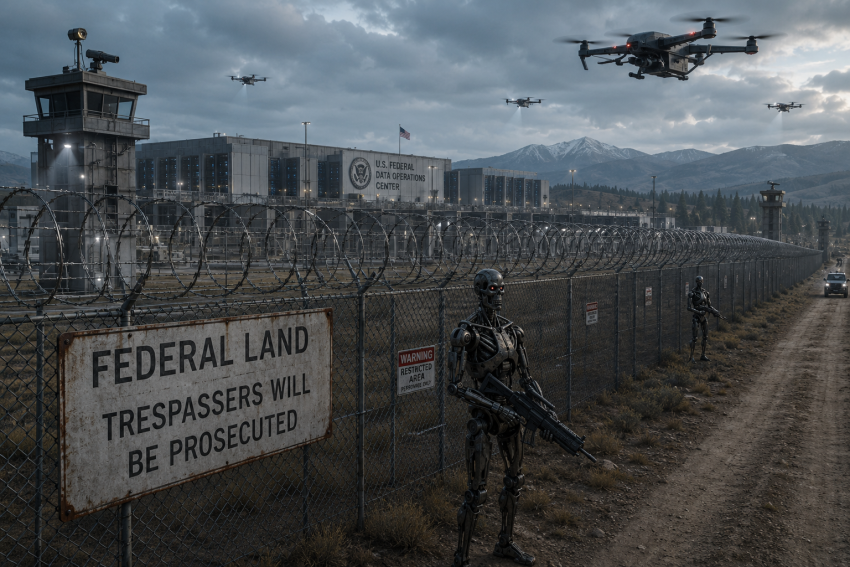
The Trump administration is moving full speed ahead with plans to build massive AI data centers on federal lands across the country. From Nevada to Kentucky, Ohio, and beyond, public resources are being repurposed to power artificial intelligence infrastructure. President Trump has signaled strong support for these projects, promising data center owners wealth and protections while telling communities they cannot fight the changes.
Trump says he's giving Data Centers full immunity, that he's gonna make the owners very rich, & that they just need to convince us how great they are. pic.twitter.com/Bfy4gYiwSy
— Cuckturd (@CattardSlim) July 23, 2026
In recent statements, Trump has said data centers will receive full immunity and that their owners will become very rich. He has urged developers to convince the public of the benefits and delivered a blunt message to opponents: you cannot fight it, you have to go with it. This comes as the administration repurposes former industrial and energy sites on federal property in states including Kentucky, Ohio, South Carolina, Nevada, Idaho, Illinois, New York, West Virginia, Pennsylvania, Oregon, Colorado, Tennessee, Washington, New Jersey, New Mexico, California, Texas, and Missouri.
The Bureau of Land Management recently approved the first AI data center on public lands near Boulder City, Nevada, by quietly converting a solar project approval. That decision has already drawn appeals from environmental groups and local officials concerned about water use, power demands, and bypassed public input.
Recent polling shows roughly 70 percent of Americans oppose building AI data centers in their local communities, according to Gallup. This opposition crosses party lines. People worry about strained water supplies, higher electricity bills, environmental impacts, and noise in their backyards. Farmers and ranchers have special reason for concern. In the arid West and rural areas nationwide, these facilities consume enormous amounts of water for cooling and constant electricity that can overload grids and drive up costs for agricultural operations.
Public lands have long been managed for multiple uses, including grazing, farming, conservation, and recreation. Handing them over to hyperscale data centers shifts priorities toward distant tech interests. Rural communities often see little direct benefit while bearing the burdens of resource competition. When corporate data centers secure priority access to water and power, farmers and ranchers frequently find themselves last in line during droughts or peak demand seasons.
Beyond resource strain, many Americans express deeper unease. They fear these facilities could support expansive surveillance networks tied to camera systems and drones, such as the ones being rolled out by Flock, rather than simply powering chatbots or image generators. SkyNet is being built around us while they are labeling concerned citizens as extremists or terrorists for raising legitimate questions. This is a bipartisan issue affecting everyday Americans who want balanced development that respects local needs and does not sacrifice long term food production and rural livelihoods.
The precedent being set is dangerous. Fast tracked approvals on federal lands bypass traditional environmental reviews and public comment periods. Executive actions aim to streamline permitting and open more sites, signaling that AI ambitions outweigh community input. Once these projects take root, reversing course becomes extremely difficult. Open spaces, watersheds, and reliable energy supplies could be locked away for generations.
Farmers and ranchers understand stewardship of the land better than most. We support responsible growth and American innovation, including AI where it strengthens the nation. But we reject the idea that rural America must quietly surrender scarce resources to serve corporate tech priorities with minimal accountability or local benefit.
This is the moment for all Americans, especially in rural communities, to make their voices heard. Contact your representatives. Attend public meetings. Support groups challenging improper approvals. Demand full environmental reviews, transparent water and power impact studies, and real consideration for agricultural users. Public lands belong to the people, not to whichever industry holds the most influence in Washington.
AgroWars will keep following these developments. Rural America deserves a real seat at the table when decisions about federal lands, water, and energy could determine the future of farming, ranching, and local economies for decades to come. The time to speak up is now, before more precedents lock in a path that leaves ordinary Americans paying the price.