

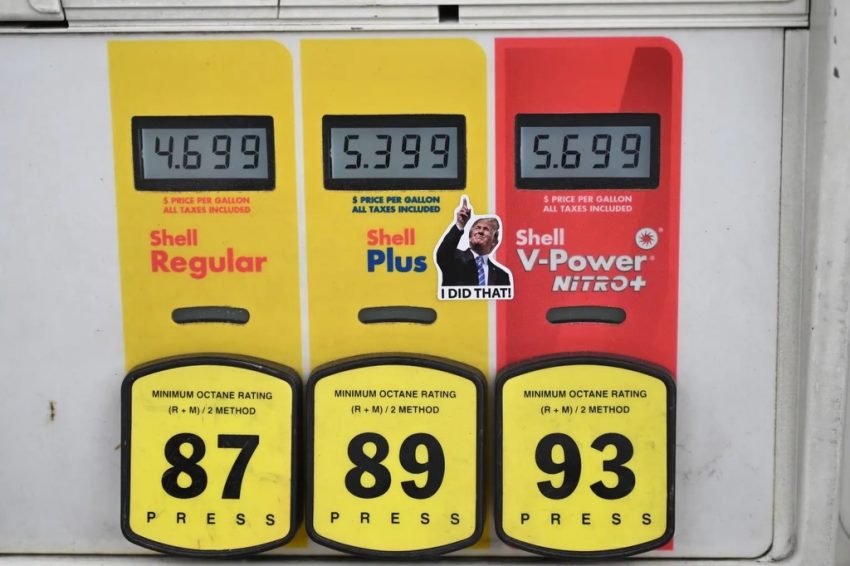
Rural America runs on diesel and gas. Tractors, combines, pickup trucks hauling feed or kids to school, the long drives between towns, the cost of getting crops to market. When fuel prices climb, the pain is immediate and real. Filling a tank or topping off equipment is not an abstract economic indicator. It is money that does not go to seed, repairs, groceries, or the mortgage.
President Trump recently made clear how little that reality registers with him. At a Georgia rally, he acknowledged that oil prices are high and that people are paying more at the pump. His advisers, he said, warned him not to talk about the profits because of the optics. He mocked the concern in a whiny voice, predicted the critical headlines about people suffering while the industry makes money, and then declared: “I don’t give a damn. We’re making a freaking fortune.”
The “we” in that sentence is not the farmer calculating diesel costs or the rural worker stretching a paycheck. It is the oil and gas business, the producers and executives, and by extension the circle that benefits when energy prices spike amid Middle East conflict. Hundreds of billions, he said. Trillions. The country is making money like never before. For those actually buying the fuel, the math is different. National averages have sat near $4.29 a gallon for regular, with diesel even higher. Doubling or sharply raising what you spend on fuel stings when margins are already thin.
This is not an isolated tone-deaf moment. It fits a pattern of priorities that track more closely with asset holders and elite interests than with the daily pressures facing most people in the heartland or young families trying to build a life.
Trump has said openly that he does not want housing prices to come down. He wants them to go up to protect the wealth of people who already own homes. Existing owners should stay wealthy, in his telling. The trouble is that homeownership rates for young adults have hit record lows. Without a realistic path to owning a place, starting a family becomes far harder. Higher prices and the broader cost of living squeeze the next generation out of the traditional markers of stability that previous ones took for granted. Celebrating rising home values while young people are locked out is a strange message from a president claiming to champion American opportunity.
The same disconnect shows up in other places. While regular Americans absorb higher energy costs, the administration’s attention has included a lavish golden ballroom project at the White House, complete with gilded details and ambitious scale. Constant fixation on such symbols of grandeur sits poorly alongside talk of ordinary people “suffering at the pump.” It reinforces the sense that the view from the top is insulated.
Then there is labor and immigration policy. An administration that talks about putting American workers first has faced criticism for approaches that some see as continuing pressure from high-skill visa programs. When foreign labor undercuts wages or adds demand in tight housing markets, the effects land on the same people already stretched by fuel and housing costs. Rural and working-class communities notice when the rhetoric of America First does not fully match the outcomes for those without connections or capital.
Billionaires and the highest levels of business, including oil executives and those positioned to profit from geopolitical disruption, such as the military-industrial complex, can celebrate the fortune being made. Most people cannot. They experience the higher prices as a tax on mobility, production, and basic living. Expecting a man who has spent his life in luxury real estate and high finance to instinctively grasp the cumulative weight of those costs is optimistic at best. The comments about gas prices, housing values, and the broader signaling of priorities suggest the gap remains wide.
Rural America has heard plenty of promises about energy dominance, economic revival, and looking out for the forgotten. When the president shrugs at higher fuel prices because the industry is cleaning up, and pairs it with a preference for rising home prices that shut out the young, it is fair to ask whose interests are actually being served. The fortune is being made. The question is who gets to share in it, and who just keeps paying more to keep the engines running.