

The Federal Trade Commission has formally launched a major industry-wide investigation into fertilizer pricing and market concentration. FTC Chairman Andrew Ferguson announced the probe on a North Texas farm on May 28, 2026, citing USDA data that shows fertilizer costs represent the largest increase in U.S. farm production expenses since 2020. Farmers from 18 states gathered and gave a standing ovation.
Major players under scrutiny include Mosaic, Nutrien, CF Industries, and Koch. Farmers accuse these companies of maintaining elevated prices long after the 2021-2022 supply shocks faded. Fertilizer prices have risen over 150 percent since 2020 in some cases, even as commodity prices and farm incomes have weakened. Many producers say the numbers no longer reflect market fundamentals.
South Dakota farmer Trent Kubik described the disconnect clearly. Urea that cost $200 to $300 per ton in 2020 spiked above $900 in 2022 when corn prices were high. Today prices hover at $700 to $800 per ton while corn prices have not kept pace. “The math just is not working out,” he said. Kubik and others held off purchases this year because the economics did not make sense.
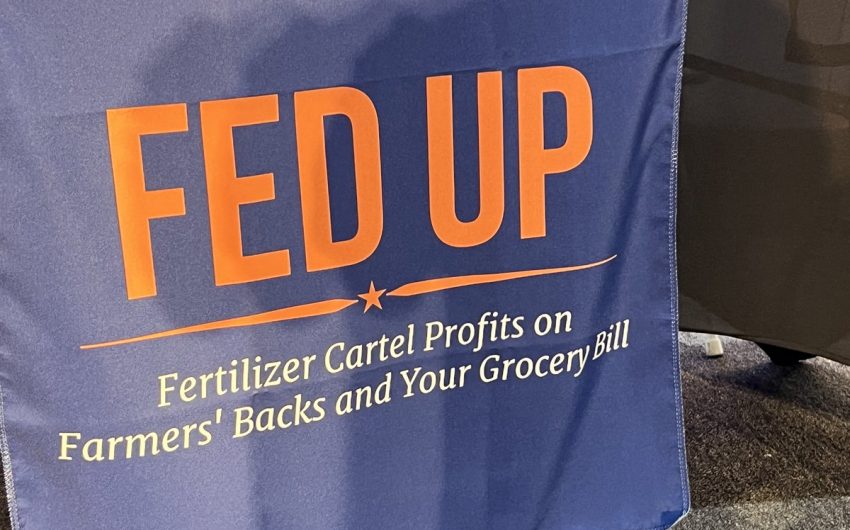
The event backdrop captured the mood: “Fed Up: Fertilizer Cartel Profits off Farmers’ Backs and Your Grocery Bill.” Farmers are not asking for government price controls. They want competitive, transparent markets free from what they describe as monopoly-like control. High market concentration leaves them with few alternatives when prices spike.
Will Anything Actually Result from This Investigation?
History offers reason for caution. Antitrust probes in concentrated industries often drag on for years. They produce reports, headlines, and occasional consent decrees, but rarely deliver swift relief at the farm gate. Past reviews of fertilizer mergers, such as the Agrium-PotashCorp deal, led to limited divestitures that did little to restore broad competition.
This time the FTC has subpoena power and can pursue enforcement if evidence of anticompetitive behavior emerges. The Trump administration is also pushing broader efforts to expand domestic production, streamline permitting, and ease transportation bottlenecks. Fast-tracking projects like the Blue Point ammonia facility in Louisiana shows some parallel action on supply.
Farmers hope the investigation serves as a strong signal. Yet without clear remedies such as breaking up concentrations or removing barriers to new entrants, many worry it could end as another chapter in a long story of frustration. Real change would require increased domestic capacity, especially in nitrogen using abundant U.S. natural gas, and more open trade in phosphate where duties have limited options.
The Needless War on Iran and Choked Fertilizer Supplies
Compounding the domestic monopoly concerns is a global supply shock from the ongoing conflict with Iran. The Strait of Hormuz, through which a significant share of global fertilizer trade once flowed, faces severe restrictions. Roughly one-third of traded fertilizer historically moved through this chokepoint. Nitrogen and phosphate products have seen sharp price jumps as energy costs rise and shipping is disrupted.
This war is needless and directly harms American farmers and global food security. Middle East fertilizer and energy exports play a key role in world markets. Disruptions here raise input costs during critical U.S. planting seasons and threaten yields worldwide. Farmers already squeezed by high prices now face additional volatility that gets passed on to grocery bills.
Rural Americans are feeling the pain. Many households already struggle with grocery costs. Higher fertilizer expenses mean tighter margins, potential cuts in application rates, lower yields, and ultimately higher food prices for everyone. Around the world, developing nations risk even greater food insecurity when fertilizer becomes scarce or unaffordable. This issue is literally life or death for millions.
A Welcome First Step, But Far From Enough
It is positive to see the FTC take formal action and listen to farmers. Combined with administration moves to boost domestic production, there is at least recognition of the problem. Yet investigations alone will not refill tanks or stabilize prices in time for this season. Farmers need competition, not endless studies. They need policies that expand reliable U.S. supply, reduce unnecessary regulatory hurdles, and avoid foreign entanglements that choke global trade.
AgroWars will continue following this investigation and its outcomes. American agriculture feeds the world. It deserves markets that work for producers, not against them. The stakes could not be higher for farm families and food security at home and abroad.