

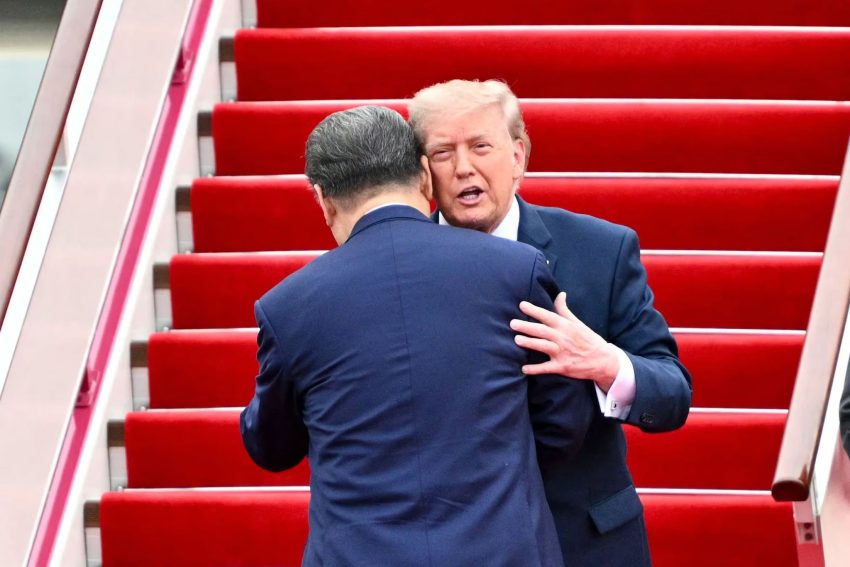
In Shenzhen on November 19, 2026, President Donald Trump sat down with Chinese President Xi Jinping and Russian President Vladimir Putin for the first formal trilateral meeting of the three nuclear powers. They posed for photos, exchanged warm words about friendship and dialogue, and discussed nuclear risk reduction, oil flows through the Strait of Hormuz, United Nations reform, and the wars in Ukraine and Iran. Trump pushed Xi to buy more American agricultural products. A joint statement emerged talking up refined petroleum supplies and avoiding nuclear war. The atmosphere was described as constructive.
For American farmers watching from the heartland, the optics and the substance collide hard with reality.
China has pledged roughly $17 billion a year in additional U.S. farm purchases on top of earlier soybean commitments. Trump reminded Xi that China has an “insatiable appetite” and that American producers can fill it. Yet data through the first nine months of 2026 shows non-soybean agricultural buys from the United States lagging badly, the lowest for that period since 2019. Grain prices remain weak. Diesel and fertilizer costs, driven higher by the Iran conflict and related disruptions, have squeezed margins. Chapter 12 farm bankruptcies rose nearly 20 percent in the first three quarters of 2026 compared with the same period in 2025. Producers who need reliable export markets and affordable inputs see another round of high-level handshakes while the ledger stays red.
Any genuine increase in Chinese purchases of soybeans, corn, sorghum, beef, or other commodities would matter. It could firm prices, clear some of the overhang, and give cash-strapped operations breathing room. Broader energy cooperation that eases refined product tightness could eventually lower input costs. A durable reduction in great-power tension might stabilize global commodity flows. Those are the potential upsides for the farm economy and, by extension, for rural communities and the larger U.S. economy that still depends on agricultural exports and the health of the heartland.
The risks are equally clear. Purchase pledges have a history of falling short. Trade remains hostage to geopolitics. If the Iran war or Ukraine fighting intensifies again, fuel and fertilizer spikes will return. If Beijing decides American agriculture is a convenient pressure point, the orders dry up. Farmers have lived this cycle before. The larger economy feels the downstream effects in food prices, rural bank stress, equipment manufacturers, and regional employment.
What makes the entire scene especially galling is the simultaneous reality of the two active wars these leaders are managing.
The United States continues to supply Ukraine with weapons and support. Ukraine uses that capability to strike deep into Russia, hitting oil refineries and cutting Russian refining runs sharply. Russian soldiers die. At the same time, China and Russia have provided weapons, components, intelligence, and other support to Iran. Iran has responded by striking U.S. bases across the region after the conflict escalated, killing American service members and damaging facilities.
While the average military men on all sides are killing and being killed, the people at the top meet, smile, and talk about shared responsibility for peace. The contradiction is not subtle. One set of capitals arms one side of a conflict that bombs the other side’s energy infrastructure. The other set of capitals arms the party that has attacked American bases and killed American troops. Yet the principals gather in the same room and treat the bloodshed as a negotiating file.
This is not abstract. It is the lived experience of the people who actually fight and the people who actually grow the food that feeds the system. As Kissinger reportedly said, “Military men are just dumb, stupid animals to be used as pawns in foreign policy.” Whether or not the attribution is perfect, the attitude it captures is on full display. The soldiers are disposable. The farmers whose diesel bills double and whose markets vanish when the great powers decide to posture are also disposable. The photo ops continue. The body counts and the bankruptcy filings continue.
For the farm sector, the meeting is another reminder that policy is made far from the fields. Export access, energy costs, and geopolitical stability are not side issues. They determine whether family operations survive another year. A real breakthrough that delivers consistent Chinese purchases and calmer energy markets would help. More theater that leaves the underlying conflicts and cost pressures intact will not. The larger economy will feel whatever outcome materializes. Rural America already does.
The leaders shook hands. The people paying the price in blood and balance sheets did not get a seat at the table.