

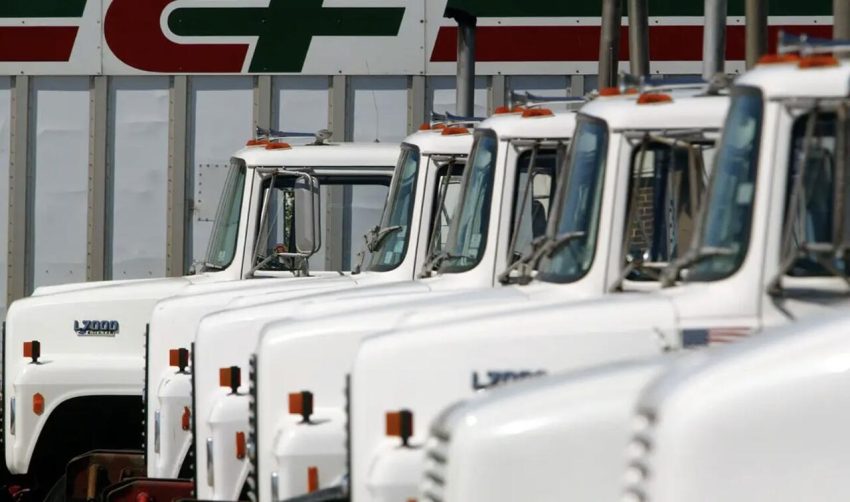
Sixteen U.S. trucking companies filed for bankruptcy in less than a month as diesel prices exploded higher. The national average climbed from roughly $5.60 per gallon at the end of August to a record $6.53 in late September, a jump of about 17 percent in just a few weeks. Prices have eased only slightly and still sit near $6.38 to $6.39 according to recent readings.
More than 250 jobs are tied up in those filings. Eight companies sought Chapter 11 protection so they can keep operating while restructuring debt. Seven went Chapter 7 and are liquidating assets and shutting down. Larger names in the wave include Xoco Transport and Globemaster. Fuel is not the only pressure. Carriers already faced rising labor, insurance, maintenance, and regulatory costs, plus soft spots in freight demand. But the sudden diesel spike left little room to maneuver. Companies can absorb the hit and watch margins vanish, try to pass costs through higher rates and risk losing loads, or cut trucks and drivers, which shrinks capacity further.
Diesel remains elevated because of disruptions tied to the disastrous war with Iran. Refined product flows have been constrained, inventories drawn down, and Middle Eastern refining capacity limited. Until those supply issues ease, the pressure on trucking continues.
What this means for farmers right now
Harvest is in full swing across much of the country. Combines, grain carts, tractors, and semi-trucks all run on diesel. Higher fuel costs raise the direct expense of getting the crop out of the field. Then comes the haul: moving grain from farm to elevator, ethanol plant, processor, river terminal, or rail. That leg depends heavily on the same trucking sector now shedding companies and capacity.
When carriers exit or park trucks, available hauling power tightens. Farmers and elevators can face higher freight rates, longer wait times for trucks, or both. Spot market operators and smaller fleets have been especially vulnerable because they have limited ability to hedge fuel or lock in long-term contracts that cushion the blow. Larger contract carriers fare better, but overall capacity still matters when grain is coming off the combines in volume and elevators need steady movement.
The entire agricultural supply chain runs on diesel. Inputs moved earlier in the season. Equipment and parts travel by truck. Livestock feed, fertilizer, and finished goods all rely on the same fuel. A wave of trucking failures does not stop the harvest, but it raises the cost of every mile and can create bottlenecks exactly when timely movement protects grain quality and cash flow.
Farmers who locked in fuel earlier or have on-farm storage for diesel are better positioned. Those buying on the spot market feel the full weight of $6-plus prices on every gallon burned in the field or on the road. Custom harvest rates and commercial hauling quotes are already reflecting the higher cost structure. Grain buyers and elevators will pass what they can downstream, but the squeeze starts at the farm gate.
This is not abstract. Diesel at these levels turns a normal harvest into a higher-stakes logistics problem. Fewer trucks on the road, higher per-mile costs, and thinner margins for the remaining carriers all point the same direction: more expensive grain movement and greater risk of delays precisely when farmers need reliable hauling the most. The trucking bankruptcies are the visible crack. The deeper pressure runs through every diesel tank from the combine to the terminal.