

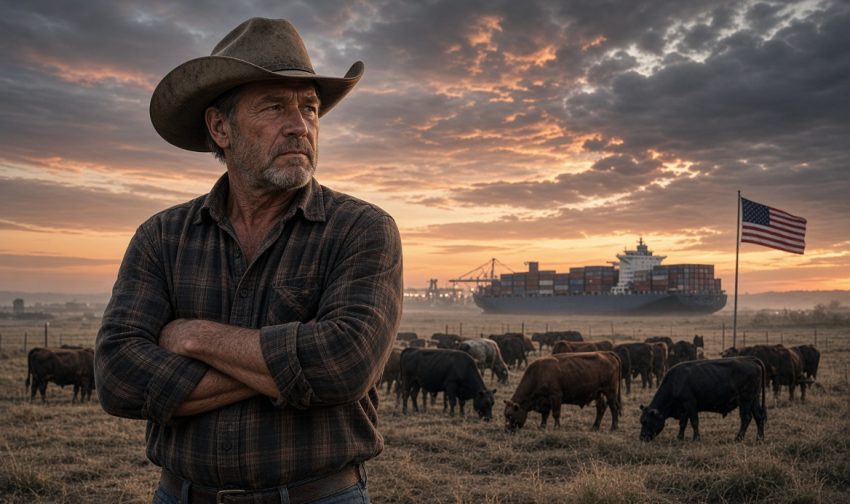
American cattle producers woke up Friday to another gut punch from Washington. President Donald Trump announced on Truth Social that the United States will allow up to 300,000 metric tons of foreign beef intended for ground beef to enter the country for the next 90 days without the usual out-of-quota tariff. He claimed a commitment that this product would sell at 25 percent below current market prices. The stated goal: lower prices for American families while somehow giving the “Great American Beef Herd” room to grow.
Cattle markets reacted instantly and harshly. By mid-morning, October live cattle futures were down $4.70 and September feeder cattle had dropped $6.65. Producers who have spent years rebuilding after drought, high input costs, and a herd that hit multi-decade lows watched the numbers fall in real time. This is the season when ranchers decide whether to expand or hold the line. Flooding the market with cheaper imports does not look like support.
The National Cattlemen’s Beef Association did not mince words. “Today’s announcement and other market interventions throw cold water on the prospect of herd expansion and sacrifices long-term stability for short term messaging,” the group said. They noted that flooding the market with government-facilitated, below-market beef is not the path to rebuilding the American cattle herd. Nebraska Cattlemen and individual producers echoed the disappointment. On social media, the frustration from ranchers and rural voices was blunt: this feels like a slap in the face to the very people who have long backed Trump.
Many see a contradiction. The administration has talked up America First policies and support for domestic agriculture. Yet the practical result is more foreign product undercutting U.S. producers at a critical moment. Sen. Tim Sheehy of Montana, a Republican, said he had advised against this approach for a year because ranchers have already struggled against packer concentration, and this move would harm them further. Critics pointed out the irony of removing tariffs after years of rhetoric about protecting American industry, arguing it effectively admits tariffs raise costs while simultaneously punishing domestic cattlemen.
This is not the first time. Earlier in 2026 the administration arranged for additional Argentine beef imports. Pushback from Congress and ranch groups forced a retreat from broader ideas in May. Now the 300,000 metric ton allowance returns, framed as temporary relief for consumers ahead of midterms. Economists note the volume is roughly 3 percent of U.S. beef demand and could represent a meaningful share of total imports. For producers already facing thin margins and uncertainty, even temporary pressure matters.
Ranchers are not opposed to affordable food. They are opposed to policies that suppress the prices they receive while claiming to help them expand. Herd rebuilding requires confidence that the market will reward the risk and investment. When futures tank on news of increased imports sold below market, that confidence erodes. Country-of-origin labeling and support for smaller processors have been floated as better ways to give consumers choices and producers a fair shot. Those ideas have not received the same urgency.
The cattle business is not abstract. It is family operations, rural communities, and long-term stewardship of land. When those producers say they feel screwed by a policy that prioritizes short-term price optics over market stability, they are describing a real economic hit. Trump’s announcement promises lower ground beef prices for working families. For the ranchers who raise the cattle, the immediate message is different: your product just got cheaper competition courtesy of Washington, and the herd expansion talk rings hollow when the futures board is flashing red.
AgroWars stands with the producers on the ground. Temporary tariff relief for foreign beef may move the needle at the grocery store for a few months. It does little to fix the underlying challenges facing American cattle country, and it risks making those challenges worse.