

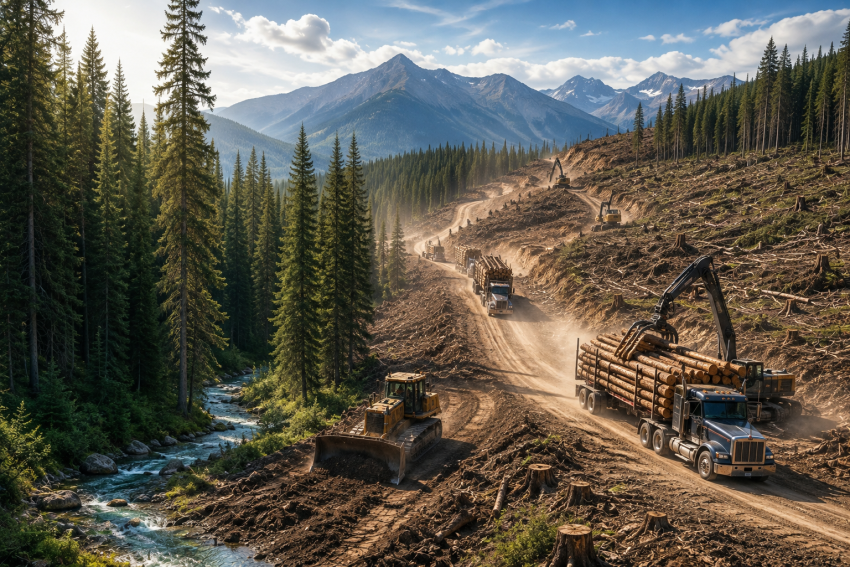
On August 18, 2026, the USDA announced its intent to fully rescind the 2001 Roadless Area Conservation Rule. The move would open roughly 45 million acres of inventoried roadless areas on national forests to new road building, logging, and other development. Officials frame it as essential “active forest management” to reduce wildfire risk. Forest Service Chief Tom Schultz, a former logging executive, and Deputy Secretary Stephen Vaden have pushed the access-first narrative. Western governors, including Utah’s Spencer Cox, have applauded the decision.
The rule has long barred most new roads and large-scale commercial logging in these last relatively unroaded national forest landscapes while still allowing limited activities such as firefighting, grazing, and certain recreation. Nearly 30 percent of the protected acreage sits within 30 miles of national park lands, meaning the decision reaches far beyond the forests themselves.
The Case for Repeal
Supporters argue that forests need more access so crews and equipment can thin overgrown stands, create firebreaks, and supply mills that support rural jobs. Executive orders promoting deregulation, expanded timber production, and energy development are cited as justification. In this view, locked-up land represents lost economic opportunity for communities that depend on resource extraction. Temporary logging contracts and road-building work could inject cash into certain rural counties, and some local officials see any increase in timber volume as a win for schools and services funded by timber receipts.
The Reality Behind the Rhetoric
The wildfire argument collapses under the agency’s own data and independent science. Ninety percent of wildfires start within a half-mile of a road. Inventoried roadless areas, which cover about 28 percent of Forest Service land, account for only around 3 percent of the fires that begin there. Roads bring people, vehicles, catalytic converters, trailer chains, cigarettes, and invasive grasses that carry fire. When the original rule was written, the Forest Service itself concluded that building more roads into these areas would likely increase human-caused ignitions and that keeping them roadless would not raise the number or size of wildfires. Recent research in Biological Conservation confirms that these landscapes hold some of the highest-integrity forest ecosystems in the country and experience lower ignition density than roaded forests.
The Forest Service already manages the largest road network of any single government entity on the planet, more than 386,000 miles, enough to circle Earth more than 15 times. Deferred maintenance on roads and bridges sits at roughly $7 billion, and that figure excludes many high-clearance and closed roads the agency can no longer even quantify reliably. Passenger-car standard miles have declined from about 86,000 in the late 1990s to roughly 65,000 today. The agency cannot maintain what it has. Adding tens of thousands more miles makes little fiscal or practical sense.
Even areas already accessible have not received the treatments the administration claims are urgently needed. More than a quarter of roadless acreage sits adjacent to existing roads, yet work to reduce fuels there remains limited. Meanwhile, overall wildfire mitigation work dropped sharply in the administration’s first year. Workforce reductions, reorganization, and budget pressures have gutted capacity. Opening new ground while neglecting existing access and underfunding the agency does not look like serious fire strategy. It looks like an opening for industrial extraction.
The press release itself lists the real priorities: deregulation, expanded timber production, energy development, and resource extraction in places like Alaska. Wildfire language provides the cover. The pattern fits a broader push that advances mining, oil and gas, and weakened wildlife protections across public lands.
What This Means for Rural America
Rural communities live closest to these forests. Clean drinking water for towns and farms often originates in roadless headwaters. Intact watersheds reduce flood and sediment damage downstream. Wildlife populations that support hunting and fishing economies depend on large, connected, unfragmented habitat. Recreation, from backpacking and mountain biking to quiet hunting camps, already generates substantial local spending without requiring permanent industrial scars.
Short-term timber jobs and road contracts can look appealing where mills have closed and populations have declined. Yet those jobs are cyclical, mechanized, and often temporary. Once the high-value timber is gone and the roads wash out, the lasting liabilities fall on taxpayers and local landscapes: eroded hillsides, degraded fisheries, invasive weeds, higher fire risk from new human access, and diminished tourism appeal. National parks and surrounding gateway communities stand to lose too, as road building, logging, and extractive activity press closer to their boundaries and degrade the viewsheds, soundscapes, air, and wildlife corridors that visitors travel to experience.
America’s remaining wild forests are not an unused resource waiting for the highest bidder. They are one of the country’s greatest enduring treasures. They provide clean water, biodiversity refuges, and places where people can still experience something larger than the next quarterly earnings report. Rising GDP figures that primarily enrich distant shareholders and corporate executives do not replace a roadless canyon, an old-growth stand, or a functioning watershed. Once those places are roaded, logged, and fragmented, the loss is effectively permanent on human timescales.
Public comments on the proposed rescission open August 19 and run through September 21, 2026. The decision will shape the character of rural landscapes, the health of downstream communities, and the inheritance left to future generations. Rural America has long balanced working the land with respecting the wild places that make life there possible. Opening the last unroaded national forests to industrial expansion tips that balance toward extraction first and conservation last. The treasures at stake are worth more than the temporary profits of those best positioned to liquidate them.