

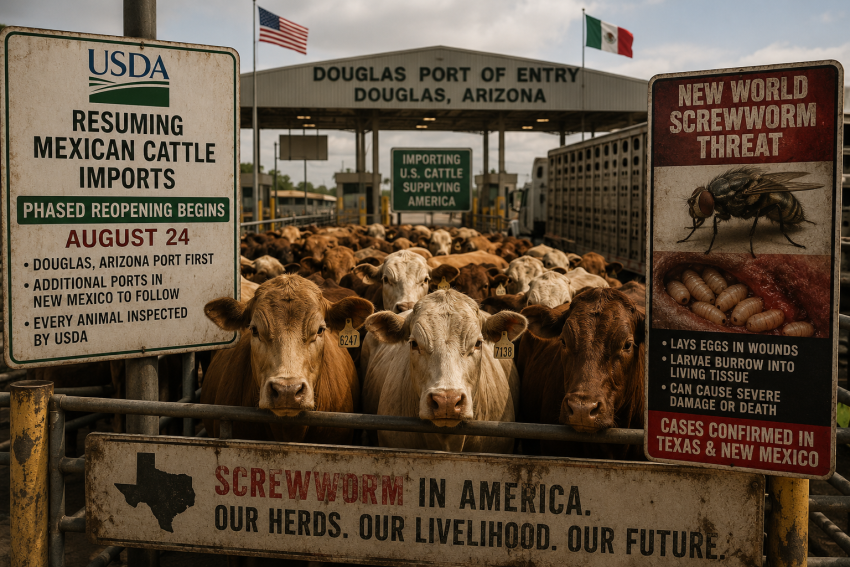
The United States Department of Agriculture announced it will end its yearlong ban on live cattle imports from Mexico, with a phased reopening of southern border ports scheduled to begin on August 24. The original suspension, imposed in May 2025, aimed to halt the spread of the New World Screwworm, a destructive parasitic fly that infests wounds in livestock and other warm-blooded animals.
According to the USDA, the restart will begin at the Douglas, Arizona port, followed by additional ports in New Mexico. Officials cite Mexico’s commitment to screwworm control measures, including inspections, and note that Sonora and Chihuahua states in Mexico present lower immediate risk due to their distance from southern hotspots and established protocols. Every imported animal will receive full USDA inspection.
This decision comes despite confirmed New World Screwworm cases already appearing in Texas and New Mexico. The pest, eradicated from the US in the 1960s through a sterile insect technique program, returned with detections starting in June 2026. Over 42 cases have been reported in cattle, goats, sheep, and even a dog, marking the first domestic presence in years.
The New World Screwworm fly lays eggs in open wounds or mucous membranes. Larvae then burrow into living tissue, causing severe damage that can lead to death if untreated. The outbreak has affected hundreds of thousands of animals in Mexico and Central America, with the northward creep raising alarms for American ranchers.
US cattle imports from Mexico normally exceed one million head annually, supplying a significant portion of animals for feedlots and processing. Domestic cattle inventories sit at multi-decade lows, driving record beef prices and pressuring packers. Some industry voices, including Texas Agriculture Commissioner Sid Miller, welcomed the resumption for easing supply strains and supporting trade.
However, critics argue the timing undercuts domestic producers and heightens risks. Groups like R-CALF USA have cautioned against reopening before full eradication, pointing to active cases on the US side of the border. The move prioritizes short-term supply relief over long-term biosecurity for American livestock operations already strained by the outbreak.
The USDA has invested in sterile fly production and dispersal efforts on both sides of the border. Yet production levels remain insufficient to fully suppress the pest, and cases continue in US states despite the import ban. Resuming flows from Mexico could introduce additional pressure before control measures prove fully effective.
American ranchers and farmers face a familiar challenge: policies that appear to favor trade volumes and lower consumer prices at the expense of domestic herd health and industry stability. With screwworm already established in parts of Texas and New Mexico, loosening restrictions now risks accelerating spread and imposing treatment costs, lost animals, and market uncertainty on US operations.
AgroWars will continue monitoring developments as ports reopen and the screwworm situation evolves. Producers should maintain strict wound management, surveillance, and reporting protocols to protect their herds.