

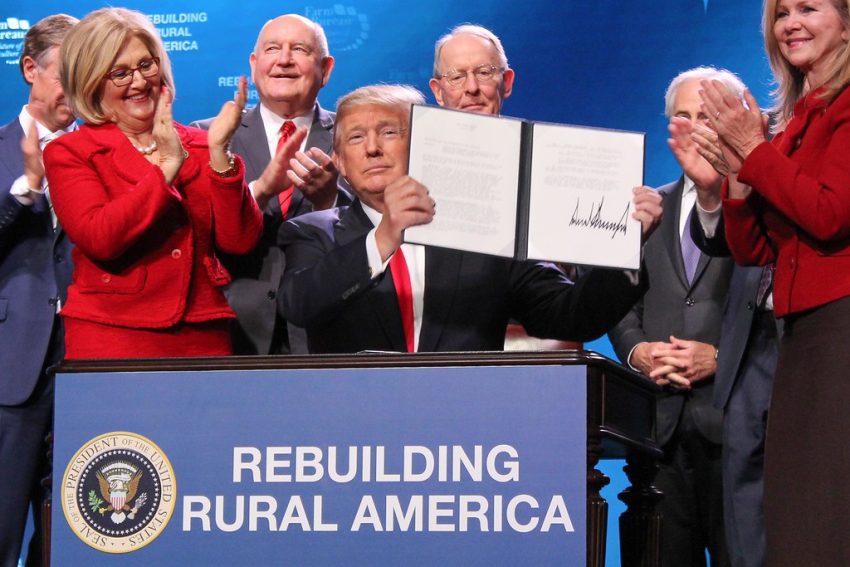
Trump’s new budget proposal involves cutting nearly $5 billion to the USDA. In the debate over the proposed FY2027 budget for the United States Department of Agriculture, many farmers see real value in removing funding for diversity, equity, and inclusion programs, initiatives tied to green energy agendas widely viewed as ineffective, and other expenditures that stray from direct support for production agriculture. For most operations across the heartland, eliminating what appears as bureaucratic bloat and ideological add-ons represents a long overdue course correction. A leaner USDA that sticks to its core mission of backing American growers, ranchers, and food producers aligns with practical realities on the ground.
Yet these same proposed cuts, totaling roughly five billion dollars, carry risks that could undermine the very farmers they aim to serve. At a moment when input costs remain elevated, supply chains face ongoing pressure, and global demand for reliable U.S. food production continues to climb, a government that claims to prioritize agriculture must ensure its actions strengthen rather than weaken the sector. Reductions in agricultural research grants, rural infrastructure support, conservation technical assistance, and certain marketing programs could slow innovation, limit access to new tools, and constrain the ability of family farms to compete. When every bushel and pound counts toward national food security, even targeted trims demand careful scrutiny to avoid collateral damage.
If the goal is genuine fiscal discipline and the elimination of waste, then the conversation must extend beyond the USDA. What involves by far the most wasteful spending remains the allocation of hundreds of billions toward foreign conflicts that bear little connection to core American national interests. Resources poured into distant theaters divert attention and capital from domestic priorities, including the very systems that keep grocery shelves stocked and export markets open.
Recent reports highlight concerns that some military commanders have framed U.S. actions in the Middle East, including operations involving Iran, in terms of biblical end-times prophecies. Anonymous complaints from service members, compiled by the Military Religious Freedom Foundation, allege that troops were told the conflict forms part of a divine plan, with references to the Book of Revelation, Armageddon, and descriptions of President Trump as anointed to advance such events. In March 2026, nearly 30 members of Congress, led by Representatives Jared Huffman, Jamie Raskin, and Chrissy Houlahan, formally requested that the Department of Defense Inspector General investigate these allegations for potential violations of religious neutrality policies and constitutional principles.
God 'raised Trump' to kill 'Islamic Iranians' for ‘Jewish people’ — top pastors at White House Easter
How Christian of them pic.twitter.com/jfvQhJIDeA
— RT (@RT_com) April 6, 2026
These accounts, whether fully substantiated or not, underscore broader questions about the motivations and costs of extended overseas engagements. American agriculture stands as a pillar of economic strength and strategic independence. Safeguarding it requires more than just excising peripheral programs from the USDA. It demands a consistent commitment to policies that keep farmers productive, costs manageable, and the supply chain resilient.
The wiser path lies in erring on the side of peace, prosperity, and protecting our food supply. Diplomacy and restraint in overseas engagements free up focus and funding to address challenges at home. In contrast, continued emphasis on remote military commitments risks compounding pressures already felt by producers. Policies that restrict fertilizer availability, drive diesel prices higher through global instability, reduce targeted agricultural funding, or shift scarce water resources toward AI data centers could erode the foundations of American farming. Such combined effects threaten to create widespread disruptions in production and distribution, echoing the kind of systemic food shortages seen in historical crises, such as the Holodomor.
As lawmakers review the budget proposal in the months ahead, the test will be whether the final outcome delivers efficiency without sacrificing the capacity of the men and women who feed the nation and the world. Prioritizing peace and domestic food security offers the clearest route to long-term prosperity for rural communities and the entire country.