

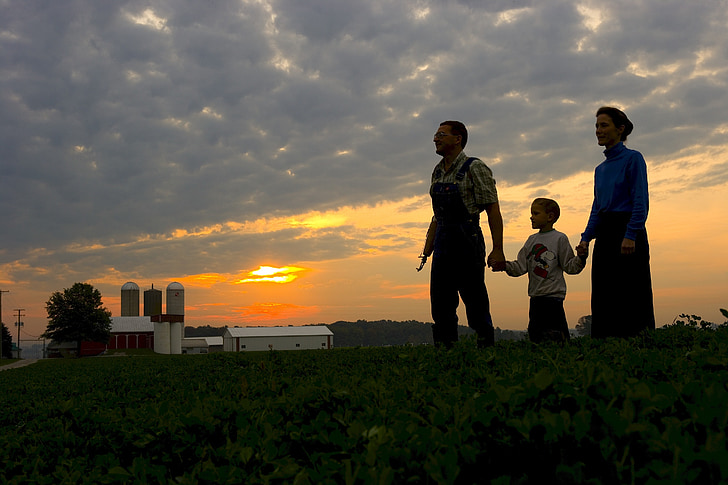
The numbers do not lie. According to the latest USDA Farms and Land in Farms report, released in mid-February 2026, the United States shed another 15,000 farms in 2025. Total farm operations now stand at 1.865 million, down from more than 2 million in 2018. That represents a net loss of 158,200 farms over seven years, an 8 percent drop in the backbone of American agriculture.
Nearly all of these are family farms. USDA data consistently shows family-owned operations make up 95 percent or more of U.S. farms and the vast majority of the losses fall on them. No state gained a single farm last year. Minnesota lost 1,300 operations, dropping to 64,000. Texas lost 2,000, now at 229,000. Every size category except the largest operations (those with more than $1 million in annual sales) shrank. Those mega-farms actually added 850,000 acres while total U.S. farmland declined by 2.5 million acres to 874 million. Average farm size climbed to 469 acres, up from 444 acres in 2018.
This is not a natural evolution. It is consolidation on steroids.
The Dangers of an Industry Controlled by Fewer Hands
When a handful of operations swallow up land and market share, the risks multiply. Large-scale farms now control more than half of all U.S. farmland even though they represent less than 10 percent of total farms. Farms with under $100,000 in sales still make up nearly 79 percent of operations, but control only about 26 percent of the land. Forty-eight percent of farms generate less than $10,000 a year, many functioning as hobby or part-time outfits that cannot compete on scale.
This concentration hands enormous power to the largest players and the corporations that supply them with seed, fertilizer, equipment, and processing. Farmers face squeezed margins, limited buyer choices, and rising input costs. Supply chains become brittle. A disease outbreak, trade disruption, or weather event at a few key mega-operations can ripple across the entire food system. Rural economies lose the diversity and resilience that hundreds of thousands of independent family farms once provided.
Devastation Wreaked on Rural America
The human and community cost runs far deeper than balance sheets. Every farm that closes means one less family buying feed at the local co-op, one less tractor repaired at the town shop, one less child in the rural school, and one less patient at the local clinic. Main streets empty out. Tax bases shrink. Hospitals and schools consolidate or shut down entirely. Young people see no future and leave for cities, accelerating population decline across the Great Plains and Midwest.
Studies and on-the-ground reports confirm the pattern: counties dominated by large industrial operations have seen steeper drops in median income, population, and local businesses than areas with more midsize family farms. The social fabric frays. Volunteer fire departments struggle for members. Churches lose congregations. The cultural heart of rural America, built on multigenerational family farms, erodes year after year.
The Current Ag Economy Guarantees Worse Is Coming
Nothing in today’s agricultural economy points to a turnaround. Commodity prices remain stubbornly low for major crops while input costs, from diesel to fertilizer to equipment repairs, stay elevated. Economists describe a crop-sector recession, with producers fighting for survival rather than planning for profit. High debt loads from recent years of tight margins add pressure. Trade tensions and policy uncertainty compound the stress.
USDA modeling shows the trend accelerating. With conditions favoring scale, more midsize operations will exit, selling land to the biggest players who can absorb losses or leverage volume. Without intervention, the next decade could see another wave of losses that drops the total farm count well below current levels.
What Must Be Done to Reverse the Trend
Reversing this decline requires targeted, decisive action rather than blanket subsidies that mostly flow to the largest operations.
First, antitrust enforcement in agriculture must ramp up. Break the stranglehold of a few meatpackers, seed companies, and processors so farmers regain bargaining power and fair prices.
Second, policy must prioritize family farms in the next farm bill and beyond. Expand whole-farm revenue protection that actually works for diversified operations instead of single-commodity giants. Improve access to credit and land for beginning and young farmers. Streamline programs that cut red tape for small operations while directing safety-net support where it is needed most.
Third, invest in rural infrastructure and local markets. Strengthen incentives for direct-to-consumer sales, regional food hubs, and value-added processing that keep dollars circulating in farm communities. Promote climate-resilient and regenerative practices that reduce input costs and build soil health for the long haul.
Fourth, support farm succession planning. Tax incentives, technical assistance, and land-transfer programs can help keep operations in family hands instead of auction blocks.
Fifth, protect farmland from conversion. Curb urban sprawl and foreign ownership that removes productive acres from American control.
The loss of 15,000 farms last year is not just statistics. It is 15,000 families, 15,000 pieces of rural heritage, and 15,000 threads in the fabric that feeds the nation. If policymakers and the public continue to treat this as inevitable, rural America will hollow out further, food security will rest on fewer shoulders, and the diverse, resilient agriculture that built this country will vanish.
The alarm bells are ringing. It is time to answer them with policies that put family farms first. The future of rural America, and ultimately the security of our entire food system, depends on it.