

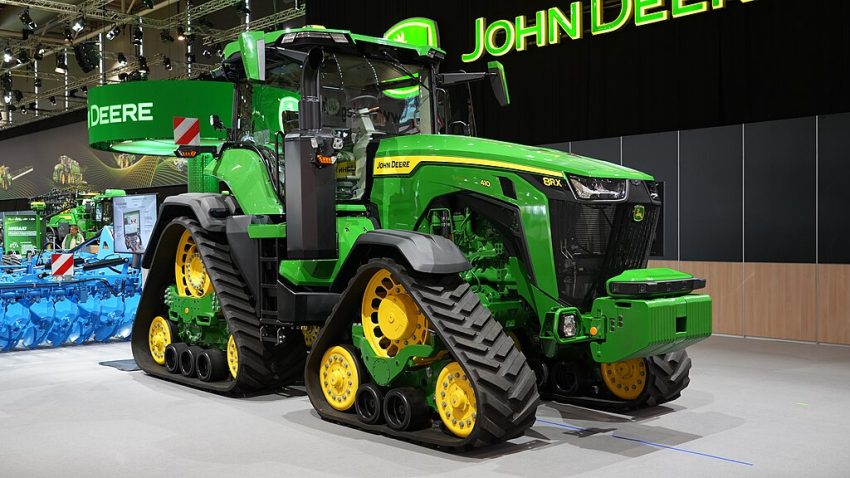
In a fiery White House roundtable on December 8, 2025, President Donald Trump zeroed in on a pain point for American farmers: skyrocketing prices for tractors and other farm equipment. As he unveiled a $12 billion aid package to ease the sting of low crop prices and trade disruptions, Trump turned his sights on manufacturers like John Deere. “They’re going to have to reduce their prices because farming equipment has gotten too expensive,” he declared, pinning much of the blame on “environmental excesses” that he said add needless complexity and cost without delivering real benefits. Farmers, already squeezed by volatile markets, nodded along as Trump vowed to slash those regulations through the EPA and USDA, promising simpler machines that hark back to the “old days” when a farmer could fix his own gear.
Trump’s rhetoric struck a chord. Modern tractors, burdened by emissions tech, can cost 200 to 300 percent more than they did three decades ago, far outpacing inflation. But while the president’s call-out resonates on the farm floor, the full story reveals that manufacturers aren’t the sole villains. A web of factors, including some of Trump’s own policies, has fueled the price surge.
Not Entirely Manufacturers’ Fault: Tariffs and Supply Chain Squeeze
Trump’s administration has championed tariffs to protect U.S. industries, but they’ve boomeranged on farm equipment makers. Duties on imported steel and aluminum, key materials for tractors and combines, have jacked up production costs by as much as 78 percent since the 2018 trade war, according to the Association of Equipment Manufacturers. Even domestic builders like Deere feel the pinch, as global supply chains crisscross borders for parts like sensors and hydraulics. Recent hikes on imports from China, Mexico, and Canada have forced companies to absorb hits or pass them along, with dealers forecasting 1 to 10 percent price bumps in 2026.
Add in pandemic-era disruptions and soaring raw material prices, and it’s clear why equipment lists have ballooned. Farmers delay buys, turning to used machines, but even those values are climbing as new gear becomes unaffordable. Manufacturers argue they’re caught in the crossfire, innovating with automation to cut long-term farm costs while grappling with these external pressures.
John Deere Pushes Back: “We’re Already Helping Cut Costs”
John Deere, the tractor giant Trump name-checked, didn’t take the jab lying down. In a swift statement, the company aligned with the aid package but highlighted its own efforts to ease farmer burdens. “John Deere shares the Administration’s focus on reducing costs for our nation’s agricultural producers and consumers. We are doing all we can to help U.S. farmers reduce input costs,” the firm said.
CFO Josh Jepsen echoed this on Fox Business, praising regulatory relief but stressing tech like AI weed detection and autonomous tractors as the real game-changers for profitability. “There’s plenty of opportunity to continue to support our farmer customers… through technology that can help them save on their inputs or improve their yields,” Jepsen noted. Deere’s stock dipped 1.8 percent post-remarks, reflecting investor jitters over forced price cuts.
The company insists its high-tech features, from satellite-guided planting to chemical-saving sprayers, offset upfront costs by slashing labor and input expenses over time.
Environmental Regs: DEF’s Hidden Toll on Machinery Prices
Trump’s sharpest critique targeted emissions rules, particularly Diesel Exhaust Fluid (DEF) systems mandated under EPA Tier 4 standards since 2010. These setups inject DEF into exhaust to curb nitrogen oxide pollution, but they’ve layered on complexity: extra tanks, sensors, and catalytic converters that drive up manufacturing costs by thousands per machine. Farmers gripe about frequent malfunctions, pricey repairs, and derates that hobble equipment mid-field, costing millions in downtime annually.
Trump called it “nonsense” that complicates fixes and inflates tags without proportional gains.
The End of DEF? Trump’s Rollback Could Reshape Farm Fields
Enter Trump’s bold pledge: immediate EPA action to strip these “ridiculous” mandates, with DEF squarely in the crosshairs. EPA head Lee Zeldin, speaking at the Iowa State Fair in August, had already softened DEF rules, allowing software tweaks to delay power losses and save farmers $727 million yearly in repairs and lost productivity. Trump’s December push builds on that, hinting at fuller rollbacks to let manufacturers build leaner, cheaper rigs.
If realized, this could slash equipment prices by removing DEF hardware, easing maintenance, and reviving farmer ingenuity for on-site fixes. While some worry about air quality trade-offs, the more pragmatic question if savings will truly flow to buyers. For now, as aid checks roll out in February, funded partly by tariff revenue, one thing’s certain: Trump’s tractor tussle has farmers hoping for relief, even if the road to cheaper fields winds through Washington.