

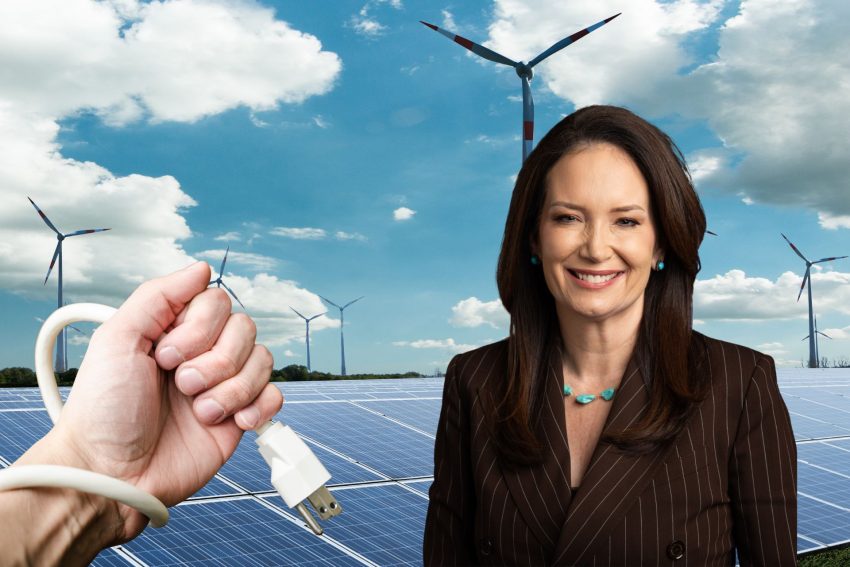
The rapid expansion of wind and solar power in the United States over the past decade was fueled by generous federal subsidies, tax credits, and state mandates. However, recent policy shifts have stripped away much of that support. This reveals underlying economic and practical challenges. Without ongoing government backing, these intermittent sources struggle to compete on cost and reliability with dispatchable options like natural gas, coal, and especially nuclear power. At the same time, prime rural land once targeted for renewable projects is increasingly eyed for massive AI data centers. These promise economic benefits but raise similar concerns about land use, energy demands, and community impacts.
The Subsidy-Dependent Reality
Wind and solar have never been fully economically viable at scale without heavy subsidies. The Inflation Reduction Act and earlier incentives drove investments. However, the 2025 “One Big Beautiful Bill Act” (OBBBA) accelerated phaseouts, tighter deadlines for credits, and outright cuts. This included terminating credits for wind components post-2027 and applying stricter phaseout schedules for solar and other renewables.
In 2025, investments in wind and solar fell sharply in the first half of the year. Federal actions canceled funding for offshore projects while halting leases. Developers have delayed or abandoned projects, with many holding out for potential policy reversals. Without subsidies, hidden costs such as backup gas plants for intermittency, new transmission lines, and decommissioning make these sources less competitive. Electricity prices have risen significantly in states with aggressive renewable mandates. Regions relying on traditional sources have seen more stable costs.
Land Use: A Stark Comparison
One of the most glaring issues is land intensity. Renewables require far more space per unit of energy produced compared to nuclear.
Nuclear is highly efficient. It uses as little as 10 hectares per terawatt-hour (TWh) per year. Wind often requires 100 hectares or more per TWh, up to 10,000 hectares when including full farm footprints. Solar is lower than wind but still significantly higher than nuclear, around 75 times more in some estimates.
Nuclear plants deliver reliable, 24/7 baseload power with minimal land disruption and lifespans of 50 to 70 years. This compares to 10 to 20 years for wind and solar equipment. Nuclear facilities are compact and efficient. They occupy far less land while providing consistent output. Nuclear is clean in terms of emissions, near-zero during operation, and highly energy-dense. This makes it a more sustainable option for decarbonization without sprawling infrastructure.
The Shift to AI Data Centers
Instead of renewables, much of the available rural land is now being repurposed for AI-driven data centers. These facilities consume enormous amounts of electricity. U.S. data centers used about 4 percent of total electricity in 2024, with demand projected to more than double by 2030. Global data center power could reach levels equivalent to powering hundreds of millions of homes.
Massive AI data centers, such as Amazon’s facilities in rural Indiana and Oregon, sprawl across former farmland. They demand significant land and power resources.
The motivation is powering AI for advanced computing, including data analytics and surveillance applications tied to government and corporate interests (for example, tools from companies like Palantir used in intelligence and security). Critics argue this prioritizes centralized control and mass data processing over genuine energy needs or rural prosperity.
Farmers Caught in the Middle
Neither large-scale renewables nor data centers are welcomed by many farmers. Both encroach on productive agricultural land, disrupt views and wildlife, increase energy prices and availability, and threaten local economies. Rural opposition has stalled wind and solar projects in numerous communities, with over 1,100 documented halts. Similar resistance is mounting against data centers, citing rising utility costs, water use, and loss of farmland.
A Better Path Forward
The wind and solar “hype phase” appears over. It is exposed by subsidy reductions and real-world limitations. Nuclear offers a proven, land-efficient, clean alternative for reliable energy. Meanwhile, the rush to AI data centers highlights misplaced priorities. It channels resources toward high-tech infrastructure rather than sustainable power or agricultural preservation. Rural communities deserve solutions that respect their land and livelihoods, not schemes driven by federal incentives or corporate ambitions. The era of chasing intermittent green dreams may be ending, but the need for practical, efficient energy remains.