

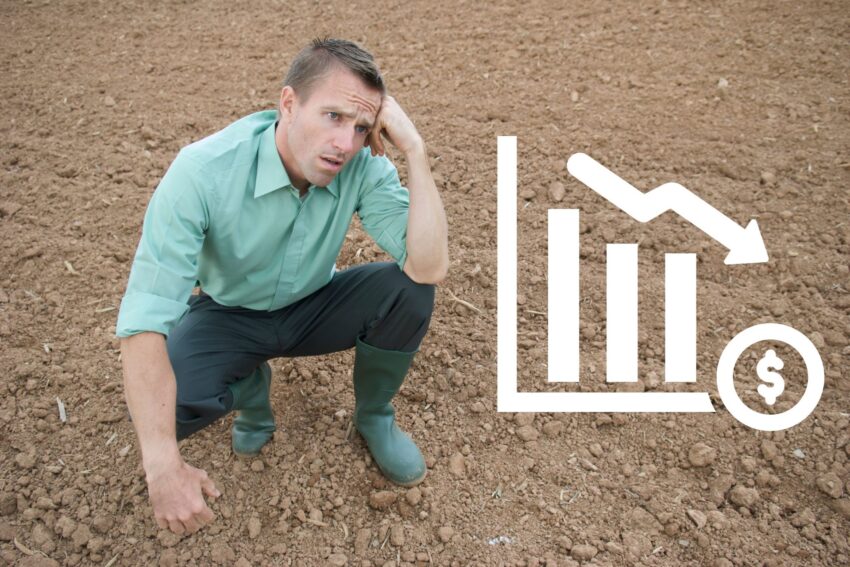
In rural America, a silent battle is raging. This is a fight against unpredictable weather or fluctuating markets, but also a deeper struggle against systemic pressures that many describe as a war on farmers. Government regulations, trade disputes, rising input costs, and corporate consolidation in agriculture have squeezed family farms to the breaking point. Nowhere is this war more evident than in the escalating mental health crisis among American farmers, marked by alarmingly high suicide rates and unrelenting stress. This crisis reveals the human cost of policies and economic forces that undermine the backbone of our food system.
One of the most harrowing statistics underscoring this crisis is the suicide rate among farmers. Farmers are 3.5 times more likely to die by suicide than the general population. For male farmers, ranchers, and agricultural managers, the rate climbs to 43.7 deaths per 100,000 people, significantly higher than the 27.4 per 100,000 average across all other occupations for men. Agriculture ranks among the top professions for suicide risk, often placing fourth highest overall, behind only a few other high-stress fields like construction or mining. These numbers represent lives lost amid financial turmoil, isolation, and a lack of support. Recent reports have highlighted how economic pressures, including trade wars and inflation, have driven calls to mental health hotlines upward, with some experts fearing a return to the suicide levels seen during the 1980s farm crisis.
At the core of this mental strain is the immense pressure of preserving a family legacy. Many farmers operate multi-generational farms, passed down through blood, sweat, and sacrifice. The fear of being the one to “drop the ball” and be forced to sell looms large, a devastating prospect that carries financial ruin and emotional devastation. Farm succession issues compound this, as questions of who will take over add layers of uncertainty and family tension. Unlike other professions where failure might mean a job change, for farmers, it often signals the end of a way of life, the loss of land that defines their identity and heritage.
Compounding this is the harsh reality that most people outside agriculture cannot fathom: pouring every ounce of effort into a year’s work only to lose money due to factors beyond one’s control. Weather events like droughts or floods can wipe out crops overnight. Global market fluctuations, driven by surpluses or trade policies, depress prices. Rising costs for fertilizer, seeds, and equipment eat into slim margins, while labor shortages and debt burdens mount. Farmers do not clock out at five; their work is relentless, tied to the cycles of nature and the demands of livestock or harvest. Yet, at year’s end, red ink on the ledger is common, leaving operators questioning their worth and future.
This burden does not fall on the farmer alone. Entire networks depend on their perseverance: families who share the workload and emotional toll, friends in tight-knit rural communities, and employees whose livelihoods hinge on the farm’s survival. When a farm falters, it ripples outward, affecting school districts, local businesses, and social fabrics already fraying from rural depopulation and infrastructure decline, such as closing schools and churches.
What makes this crisis even more insidious is the cultural ethos of rural America. Rugged individualism and stoicism, qualities that enable farmers to endure harsh conditions and long hours, also trap them in silence. These admirable traits foster a mindset where admitting vulnerability feels like weakness. As farmer Jeff Corle put it, “Guys that look like me… We’re usually not the first ones to raise our hands and say, ‘excuse me, I’d like to tell you how I’m feeling today.’” Farmers internalize pressures, rarely discussing their struggles or seeking professional help. Stigma around mental health, combined with isolation and limited access to services in rural areas, exacerbates the problem. Easy access to firearms and toxic chemicals further heightens the risk.
Yet, amid this darkness, there is a vital message for farmers. The people who love and care about you would much rather have you around, even if it means losing the farm, than to lose you forever. Life extends beyond the fields; your presence matters more than any piece of land. Organizations are working to reduce stigma and promote awareness, encouraging farmer-to-farmer conversations as a starting point. As Corle suggested, “Sometimes it takes a guy that looks like me to walk up and say, hey, it looks like you’re really having a hard time. Tell me about it.”
Farmers must cultivate optimism, grounded in reality rather than blind hope, and build confidence in steering their operations toward profitability. This means taking proactive measures, such as diversifying crops, exploring new markets, advocating for better policies, or even seeking financial counseling. Such steps foster purpose and pride, even if full success takes years to fruition. Dr. Florence Becot emphasized the need for systemic change: “Some of the research really needs to look at is what is the role of policy and what can we do so that we don’t have to talk about mental health challenges anymore.” Building rural infrastructure, cracking down on anticompetitive practices, and creating support programs like farmer “substitute” services for breaks can make a difference.
The war on farmers is real, but so is the resilience of those who feed the nation. By addressing this mental health crisis head-on, through open dialogue, policy reform, and community support, we can turn the tide. Farmers, you are not alone; your fight is our fight, and hope lies in action.