

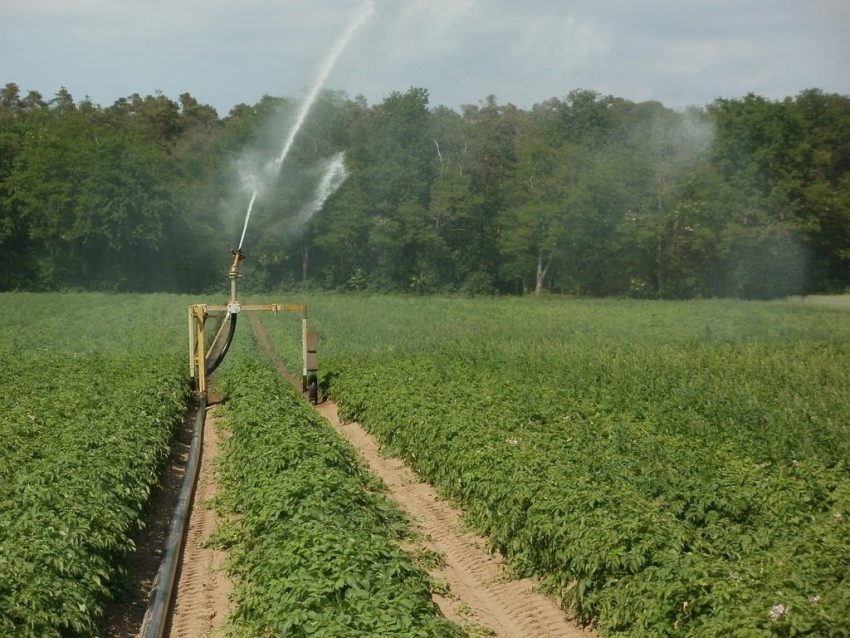
In the quiet fields of Spokane County, Washington, an 85-year-old farmer named Bob Greiff faces a threat that no drought or pest could match: the potential loss of his entire 160-acre legacy. For decades, Greiff has rotated crops like alfalfa, oats, hay, and barley on his land, irrigating with the same steady rhythm his father, Willie, established back in 1939. But in 2019, a routine letter from the Washington State Department of Ecology shattered that rhythm. The charge? Irrigating the “wrong” field. The penalty? Fines stacking up to $121,000, a judgment lien on his property, and now the looming specter of full seizure. This is not just a story of bureaucratic error or overlooked paperwork. It is a stark reminder of how government agencies can stake claims on private land, layer it with endless regulations, and demand perpetual tribute through property taxes, all while dictating every drop of water and blade of grass.
You will comply. This might be the ultimate example of hunting a bullfrog with a shotgun.@SecRollins @BrookeLRollins https://t.co/9KcorJLXzS
— Chris Bennett (@ChrisBennettMS) December 10, 2025
Bob Greiff’s ordeal began innocently enough, rooted in a simple administrative oversight from 1983. When his father secured water rights in 1949 and expanded irrigation to both sides of the road by 1953, the family farm thrived on 120 arable acres. Greiff, who took over after his father’s death in 1991, filed to formalize irrigation for both the north and south tracts in 1968, receiving approval in 1975. Yet when the state certified those rights eight years later, the south tract vanished from the records, possibly due to a clerical slip. For years, no one noticed. Greiff stayed within his allocated 136 acre-feet of water annually, using it conservatively across his modest operation. Then came the letter: He was irrigating south of the road without a permit for that specific spot.
What followed was a Kafkaesque odyssey of compliance that only deepened the nightmare. In July 2019, Greiff enlisted Tim Reierson, a water consultant with deep roots in the Department of Ecology’s own ranks. Reierson dug into the farm’s history, confirming the family’s long-standing use, and guided Greiff through the process of “spreading” water rights. This statutory tool allows farmers to redistribute permitted water across more acres for efficiency, a practice meant to reward stewardship, not punish it. From 2020 to 2021, Greiff played by the rules, limiting irrigation to the north 37 acres and planting water-hungry alfalfa to build his case. In August 2022, the Spokane County Water Conservancy Board greenlit the spreading application. Victory seemed at hand.
But Ecology intervened on day 58 of the review, sowing doubt with technical quibbles. By November, the board withdrew its approval. In February 2023, during an unannounced meeting, it voted to drop the applications entirely, handing them back to Ecology like a hot potato. The agency sat on the paperwork for over a year before rejecting it in September 2024, claiming “insufficient information.” Greiff, undeterred, resumed irrigating the south acres in 2024. The response? A cease-and-desist order in June 2023, followed by escalating fines: $6,000 in June 2024, $15,000 in August, and a crushing $100,000 in September 2025. Now, a lien clouds his title, and Ecology’s Eastern Regional Director, Brook Beeler, hints at darker tools ahead. “If he continues to illegally irrigate those acres,” Beeler warns, “we have to look at what tools do we have left in our toolbox to again ensure compliance.”
Greiff, a man who has poured his life into this land, sees no crime in his actions. “I didn’t use a drop past my legal rights,” he insists, “but because I put it on the wrong field, I’m a criminal and the state wants to take everything I have.” He has taken to returning Ecology’s letters unopened, vowing to irrigate both sides come spring 2026. “Here I am. Here I will be.” Reierson, who once begged agency officials in an email to “be human, be humane,” calls this “the worst abuse of power by Ecology over a farmer I’ve seen.” He points out the irony: Without Ecology’s meddling, Greiff’s approval would have stood, and he could have irrigated legally today.
This saga exposes a deeper rot in America’s agricultural heartland, where private property is anything but. Farmers like Greiff do not truly own their land; they hold it in a fragile truce with the state. Property taxes serve as the first toll on this road to serfdom, a perpetual rent paid to governments that can never be satisfied. In Washington, as in most states, these levies fund everything from schools to roads, but they come with strings attached. Miss a payment, and the county can auction your acres at tax sale. Greiff’s fines, funneled through the Attorney General’s office, now compound this burden, turning his modest farm into a debtor’s prison on wheels. Yet taxes are just the entry fee. The real chains are the regulations, a thicket of rules that micromanage every aspect of land use.
Consider water rights, the lifeblood of any farm. In the arid West, where Ecology wields its authority like a scepter, farmers must navigate a labyrinth of permits dating back decades. Change your crop rotation? File for spreading. Expand a field by a few feet? Prove historical use or face fines. Greiff’s case is no outlier; it mirrors the plight of small operators across the Yakima Valley, where dairy farmers whisper of getting “just roasted” by similar enforcement. Zoning laws dictate what you can build, environmental mandates control pesticide use and wetland buffers, and eminent domain lurks as the ultimate hammer. The federal government piles on with programs like the Conservation Reserve, which pays farmers to idle land but binds them in five-to-ten-year contracts. Even “voluntary” conservation easements, pushed by nonprofits and agencies, strip development rights in perpetuity, all while taxpayers foot the bill through subsidies.
At its core, this system inverts ownership. The state claims primacy over the land it taxes, asserting that resources like water belong to the public trust, not the tiller of the soil. Greiff’s water, drawn from a creek his family has stewarded since the Great Depression, becomes “illegal” not for overuse, but for crossing an invisible line on a map. It is a claim staked not by deed, but by decree, enforced through fines that can bankrupt a lifetime of labor. Reierson nails it: Ecology acted not as a partner in conservation, but as a gatekeeper demanding tribute. “The only ingredient missing was Ecology as a good faith partner,” he laments.
For the Greiffs of the world, the human toll is immeasurable. This is a farm built on seed potatoes in 1939, on pipes laid in 1953, on a son’s quiet resolve after his father’s passing. Seizure would not just end a business; it would erase a lineage, scattering tools and memories to the wind. As Greiff describes it, this is “a nightmare dream you don’t wake up from.” Yet in that defiance lies a spark for AgroWars readers: a call to scrutinize the regulators, to demand transparency in water boards and tax offices, to rally legislators for reforms that honor historical use over paper trails. Bob Greiff stands at the edge of his fields, ready for another season. If his story teaches us anything, it is that true ownership demands vigilance. The government may tax the land forever, but farmers must fight to keep it theirs.