

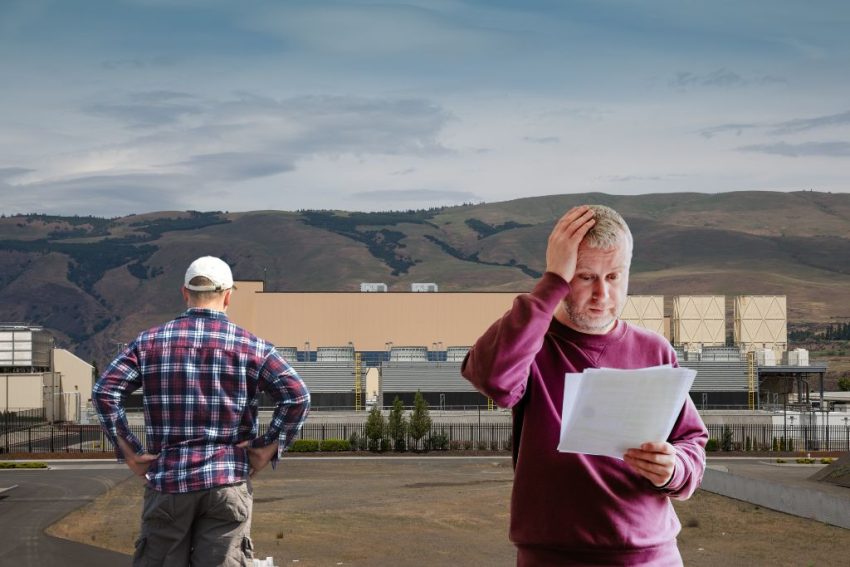
In the quiet valleys and sprawling fields of rural America, a new kind of intruder is reshaping the landscape. Massive AI data centers, fueled by the relentless demand for artificial intelligence, are popping up on former farmlands, drawing billions in investments from tech giants like Amazon, Google, and Microsoft. These facilities promise economic revival for struggling communities, but for many farmers and locals, they deliver something far less appealing: skyrocketing electricity bills, vanishing jobs, and a sense of betrayal from the very politicians who once championed their cause. As these digital fortresses gobble up power and resources, rural Americans are pushing back, questioning why the same leaders who railed against farm emissions now turn a blind eye to the AI boom’s environmental toll.
The Rural Land Grab: From Cornfields to Server Farms
Data centers thrive on space, and rural areas offer it in abundance. Cheap land and lax regulations have turned places like Montour County, Pennsylvania, into prime targets. Here, Talen Energy proposes rezoning 1,300 acres of productive farmland, including 350 acres dedicated to soybeans, corn, and livestock, for a sprawling complex near an Amish community and a soybean processing plant. Trump won Montour County by 20 points in 2024, yet over 300 residents, many in camouflage hats and red shirts, packed a recent planning commission meeting to protest. The commission voted 6-1 against the rezoning, a decision now awaiting final approval.
This is not an isolated fight. A report from Data Center Watch reveals that $64 billion in data center projects have been blocked or delayed nationwide, with hotspots in Texas, Oregon, and Tennessee. In Wisconsin, Microsoft’s plans for rural sites in Mount Pleasant and Racine County have hit roadblocks from local zoning boards and farmers worried about noise, power demands, and the industrialization of their countryside. In Michigan’s Northfield Township, OpenAI’s “Stargate” initiative, a $500 billion push for AI infrastructure, faces scrutiny as residents demand reviews of utility impacts and environmental costs.
Farmers like Theresa McCollum, a 70-year-old Trump supporter from Montour County, see these projects as a direct threat to their way of life. “I think it’s a society that has forgotten about the small person, the people who live here, the farmers who are struggling with the economy,” she said. The loss of arable land weakens local food systems, drives up property values, and turns pastoral communities into “data center alleys,” much like northern Virginia’s vast server sprawl.
Power Consumption: Jacking Up Rates While Farmers Foot the Bill
The true voracity of these data centers lies in their appetite for electricity. A single hyperscale facility can consume as much power as 100,000 homes, according to the International Energy Agency. In Pennsylvania, projected data center demand could power several million additional households by the end of the decade, per PJM Interconnection, the region’s grid operator. Electricity prices there have surged 15 percent in the past year, double the national average, with capacity costs spiking and overdue utility balances rising faster than inflation.
Rural grids, often built decades ago for scattered farms rather than megawatt loads, buckle under the strain. In central Washington, critics argue that data centers drain energy resources without proportional benefits, undermining sustainability goals in the process. Michigan residents worry that DTE Energy’s assurances against bill hikes will falter as AI demand accelerates. Nationally, the AI boom threatens to overload grids, with some states already rationing power or delaying projects.
Locals bear the brunt. In Pennsylvania, household energy debt ranks high, and analysts predict further climbs. “Data centers and utility costs were the top two issues on the ballot, and people are angry,” said Alicia Johnson, a local advocate. “They don’t want data centers without guardrails, and they don’t want to be the ones paying for them.” For farmers already squeezed by market volatility, these hikes compound the pain, turning everyday operations into a luxury.
Jobs Mirage: AI Doesn’t Put People to Work, It Replaces Them
Proponents tout data centers as job creators, but the reality falls short. Construction brings temporary work, yet permanent positions number only a few dozen to 100 per facility, mostly for technicians, engineers, and security, roles that often go to outsiders with specialized skills. In Quincy, Washington, starting pay of $60,000 sounds attractive, nearly double the local median, but it pales against the hundreds of jobs a traditional factory might provide.
Worse, AI itself erodes rural employment. Automation in agriculture, powered by these very data centers, displaces farmhands with precision tools and drones. In Wisconsin, the “promise of thousands of blue-collar jobs has been replaced by the reality of automated server farms,” notes industry analysis. Hermiston, Oregon’s city manager admits the jobs issue is “distorted” for rural economies, where data centers fill a niche but fail to spark broad prosperity. A 2025 CoBank report highlights how generative AI drives this shift, forcing operators into rural markets while upending local labor dynamics.
The Emissions Double Standard: Cow Burps vs. Server Hum
Farmers have endured years of finger-pointing for agriculture’s carbon footprint, from methane regulations to “cow burp” taxes. Yet as data centers sprout, guzzling natural gas and straining water supplies, the outcry from climate hawks in Washington falls silent. Facilities like the one proposed in Montour County sit near a 1,528-megawatt natural-gas plant, and nationwide, AI’s energy thirst could rival small countries’ emissions.
In the West, data centers siphon millions of gallons from rivers like the Columbia, clashing with farmers’ irrigation needs. Meta’s Louisiana project alone will draw more power than New Orleans, while Google’s Chilean delay highlighted aquifer risks. Rural voices, from Pennsylvania’s Rebecca Dressler to California’s Jim Costa, call for federal studies on these impacts. “That energy demand is driving up utility costs for consumers,” Costa warned, introducing the Unleashing Low-Cost Rural AI Act to probe rural fallout.
The hypocrisy stings. Politicians who decried farm emissions now fast-track AI infrastructure, bypassing environmental reviews and local input. As Craig High, a Montour County Trump supporter, put it: “Stay out. We wouldn’t even be having this conversation without federal involvement.” Protesters there even adapted “This Land Is Your Land” to chant: “Say no to rezoning, so water keeps flowing and crops keep growing.”
A Bipartisan Backlash Brews
Opposition transcends party lines. In Montour County, farmers, environmentalists, and homeowners unite “red, blue, and everything in between,” says Ginny Marcille-Kerslake of Data Center Watch. Republican Commissioner Rebecca Dressler echoes: “Small-town character defines our community. People aren’t anti-development. They just want growth that fits who we are.” Bipartisan bills, like Costa and Blake Moore’s push for impact studies, signal growing concern.
As 2026 midterms loom, this rural revolt could reshape politics. Tech’s $64 billion in stalled projects proves communities can fight back. For now, farmers watch their fields transform, their bills rise, and their voices strain against the hum of servers. The AI revolution may power the future, but in rural America, it’s leaving the past in the dust, one megawatt at a time.