

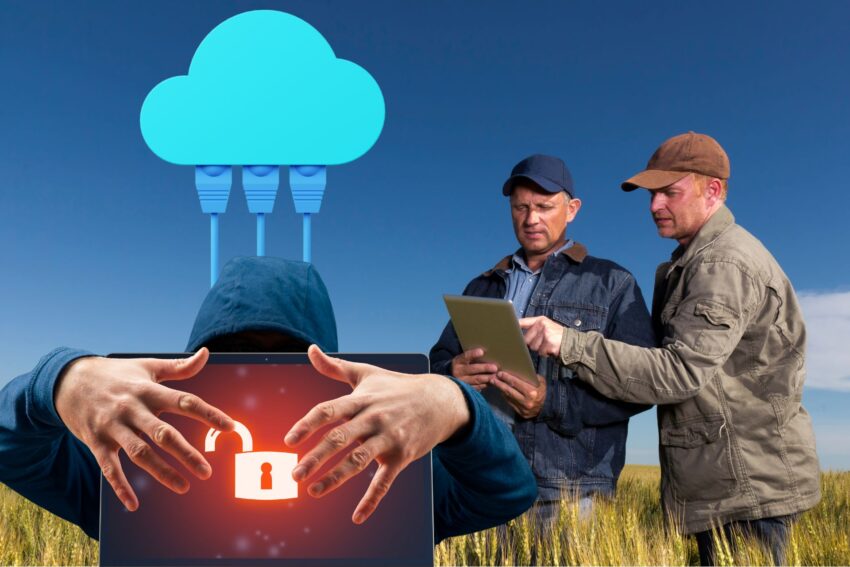
A reported security incident at the U.S. Department of Agriculture has taken key systems offline this week, disrupting tools that handle farm loans, crop insurance, and other payments to producers. Internal communications indicate the USDA’s Cybersecurity and Privacy Operations Center uncovered the issue, prompting a department-wide reset of database passwords across environments. That forced applications to be reset as well, producing multi-day outages that began around Monday and were expected to continue intermittently.
Farm Service Agency and Farm Production and Conservation systems have been among those affected. Staff reported VPN problems and guidance to avoid critical work in some cases. The main USDA website briefly showed a maintenance message. As of the latest reports, officials have not publicly detailed the nature of the intrusion, named any attacker, or confirmed whether data was stolen.
Immediate Impact on Farmers
Farmers rely on these systems for timely cash flow. Crop insurance indemnity payments, disaster assistance, loan processing, and program enrollment all run through USDA portals and back-end tools. Delays in these areas hit hardest when producers face tight operating margins, seasonal expenses, or weather-related losses. Local Farm Service Agency offices have struggled with the same outages, slowing the paperwork and status checks that keep operations moving.
Even short disruptions compound existing pressures. A payment held up for days or weeks can affect input purchases, equipment financing, or family living expenses. County offices and producers have already reported intermittent access problems with loan and payment software. While food production itself has not been reported as disrupted, the financial safety net that supports many operations has clearly been strained.
This incident arrives alongside a recent Government Accountability Office report noting that USDA and the FDA have not fully implemented multiple federal cybersecurity requirements for the food and agriculture sector. Resource and staffing constraints were cited as factors. The timing underscores how dependent modern farming has become on government digital infrastructure that is not always resilient.
The Risks of “One Farmer, One File
”The outages also cast a sharper light on USDA’s push to consolidate producer data under the “One Farmer, One File” initiative. Supported by a $300 million blanket purchase agreement with Palantir Technologies signed earlier in 2026, the program aims to replace fragmented legacy systems with a single streamlined digital record that follows each farmer across Farm Service Agency, Natural Resources Conservation Service, and related programs. The stated goals include less paperwork, faster payments, digital-first tools, and better visibility for program integrity and farm security.
Consolidation offers clear convenience. Farmers would no longer re-enter the same information for every program, and agencies could process assistance more quickly. Early use of related Palantir-powered platforms already accelerated enrollment and payments in certain assistance programs.
Yet putting more of a farmer’s operational, financial, and land data into one highly connected system creates new concentrations of risk. A successful intrusion against a unified platform could expose far more information in one place than attacks on scattered older systems. Single points of failure become more consequential when the same ontology and data model underpin loans, insurance, conservation, and disaster aid. Critics have also raised questions about long-term data control, the sole-source nature of the Palantir contract, and the broader surveillance capabilities of a company known for work with defense and intelligence agencies.
Even with strong security controls, the surface area expands. More integrated systems mean more potential pathways for lateral movement if an attacker gets inside. For producers already wary of sharing detailed operational data, the shift raises legitimate questions about who ultimately controls the file and how it might be used beyond the original program purposes.
AI-Powered Attacks Are Raising the Stakes
The USDA incident is occurring against a backdrop of rapidly advancing AI-enabled cyber threats. Agentic AI systems (autonomous agents that can plan, probe, and execute multi-step operations with limited human direction) are lowering the cost and skill barrier for sophisticated attacks. Researchers have demonstrated AI agents compromising simulated wind farm controls and shutting down turbines in under two hours. Real-world campaigns have used similar tools to probe and breach websites belonging to companies including John Deere, among hundreds of other targets, at relatively low cost.
Threat intelligence reports describe attackers employing multi-agent frameworks to discover vulnerabilities, reverse-engineer patches, and move through networks at machine speed. Government, healthcare, critical infrastructure, and agriculture-related systems have all appeared in recent activity. AI accelerates reconnaissance and exploitation, shortening the window between vulnerability disclosure and active use. For farms that increasingly depend on connected equipment, precision agriculture platforms, cloud software, and automated systems, this changes the threat calculus.
Agriculture’s mix of legacy operational technology, newer IoT devices, and growing data sharing with government and private platforms creates a complex attack surface. A breach that starts with compromised credentials or a vulnerable edge device can potentially reach payment systems, equipment controls, or sensitive production data.
Practical Steps Farmers Can Take
Individual operations cannot harden USDA’s networks, but they can reduce their own exposure and improve resilience.
- Use strong, unique passwords and multi-factor authentication on every account tied to farm finances, insurance, equipment platforms, and government portals. Prefer authenticator apps or hardware keys over SMS where possible.
- Keep offline or air-gapped backups of critical records: tax documents, insurance policies, loan agreements, production histories, and key contracts. Test that you can actually restore them.
- Segment farm networks. Separate business computers and internet-connected devices from operational technology and precision equipment where feasible. Limit remote access and change default credentials on all connected hardware.
- Treat unsolicited emails, texts, or calls requesting login details, urgent “system updates,” or payment verification with extreme skepticism. Verify through official channels.
- Maintain awareness of software updates for farm management tools, GPS systems, and controllers, and apply security patches promptly when vendors release them.
- Document alternative contacts and procedures for dealing with USDA offices, lenders, and insurance providers when online systems are unavailable. Paper trails and personal relationships still matter during outages.
- Review what data is shared with third-party platforms and government systems. Minimize unnecessary uploads and understand the privacy policies involved.
- Consider cyber insurance that covers business interruption and data recovery if the operation’s scale and risk profile justify it.
The current USDA disruption is a reminder that digital convenience carries real operational risk. Centralized data systems can deliver efficiency, but they also concentrate consequences when things go wrong. AI is accelerating both the speed of attacks and the need for better defenses. Farmers who treat cybersecurity as part of ordinary risk management (alongside weather, markets, and equipment failure) will be better positioned to weather the next outage or breach, whether it originates in Washington or on a compromised tractor terminal.