

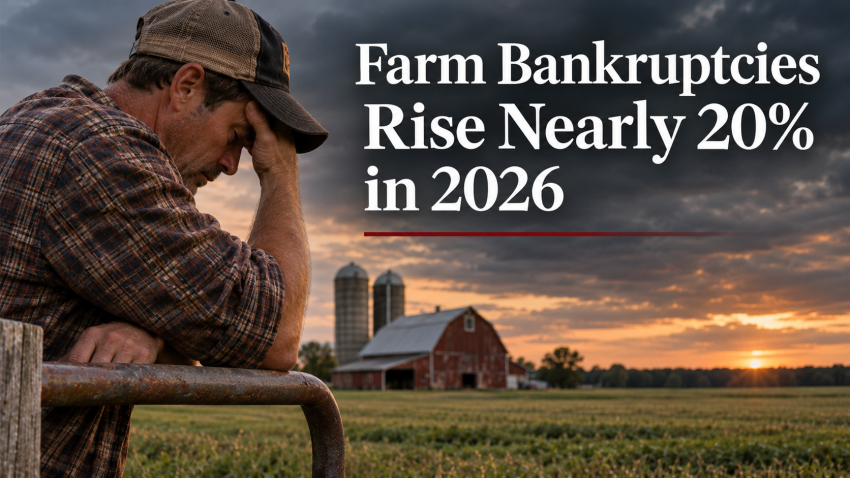
Chapter 12 farm bankruptcies are climbing sharply this year. Federal court data show 292 filings through the first three quarters of 2026. That is nearly 19 percent higher than the 246 recorded in the same period of 2025. The third quarter alone accounted for 91 cases. Arkansas led the nation, while several Midwest states also ranked among the hardest hit.
The rise comes even as many regions report solid harvests of corn, soybeans, and other major crops. Producers are bringing in the grain, yet a growing number cannot cover their bills. Net farm income is projected to fall after inflation adjustment. Multiple forces are driving the pressure.
Diesel and fertilizer costs stand out. Farm diesel prices rose dramatically through 2026. In some areas, the local price roughly doubled from early year levels near $2.75 per gallon. Nationwide on-farm diesel expenses are estimated to have increased by about $2.4 billion for the planting and harvest seasons compared with the prior year. One analysis put the year-over-year jump for key crops near 68 percent. Fertilizer prices remained elevated from earlier supply shocks and were pushed higher by disruptions tied to conflict in the Middle East. Nitrogen products and phosphates both climbed, forcing some growers to cut application rates or absorb the hit directly.
Trade policies and tariffs narrowed export outlets at the same time. Reduced demand from major buyers kept crop prices from rising enough to offset the higher costs of production. Aggregate farm production expenses climbed by more than $20 billion in recent forecasts. High interest rates added another layer of strain for operators who rely on operating loans each season.
Policy delays compounded the uncertainty. Many farmers waited through the year for a new farm bill and additional targeted assistance. An $8 billion diesel relief package was announced in the fall, but some producers described it as arriving too late to prevent the damage already done. Temporary state measures, such as relaxed weight limits or fuel rules during harvest, offered limited help.
Against this backdrop, the president’s public comments sharpened the sense of disconnect. In May 2026, when asked how much Americans’ financial pain factored into his Iran negotiations, Trump answered that it motivated him “not even a little bit” and that he did not “think about Americans’ financial situation.” Months later, with diesel still near record highs and bankruptcies rising, he dismissed fuel-cost concerns by noting that the U.S. oil and gas industry was “making a freaking fortune.”
Throughout the period, Trump continued to describe the broader economy as “doing great” and posting “historically good numbers.” For producers who watched their diesel and fertilizer bills roughly double because of the same conflict and related supply disruptions, those statements registered as indifference. Many concluded that Israel’s geopolitical priorities and industry profits ranked higher than the input-cost crisis pushing operations into the red. That perception contributed heavily to the erosion of support in farm country during the 2026 midterms.
The combination leaves a clear pattern. Good yields are not translating into profits when input costs, market access, and financing pressures all move against the farm at once. More operations are reaching the point where reorganization under Chapter 12 becomes the only option. Rural economies that depend on agriculture feel the ripple effects through equipment dealers, trucking firms, and local businesses.
As the 2026 harvest winds down, the bankruptcy numbers serve as a hard measure of how tightly the sector is being squeezed.