

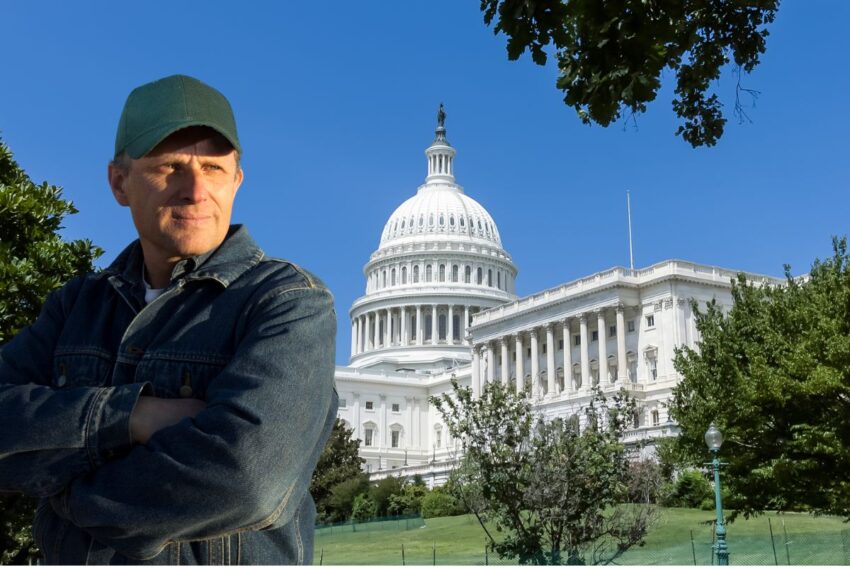
Once again, America’s farmers are left holding the bag while Washington prioritizes political self-preservation over the people who grow the nation’s food.
This week the Senate Agriculture Committee finally advanced its version of the 2026 farm bill on a party-line vote, which is progress after years of extensions of the 2018 law. The House had already passed its own bill months earlier. Yet within days, Speaker Mike Johnson canceled remaining votes and sent the House home early for a multi-week recess that runs past the November midterms. Lawmakers will campaign while farmers harvest under policies that have not been comprehensively updated in nearly a decade.
The practical effect is clear: the current farm-bill extension expires at the end of September. Without further action, programs face uncertainty at the worst possible time. Producers already operate under rising input costs. Diesel in California has averaged over $8 a gallon (with some stations reaching $9.99 or more), while prices across much of the Midwest and Heartland sit well above $6. These are levels that crush margins on grain, livestock, and every mile of hauling. Higher energy and fertilizer costs compound the squeeze, and many operators face the prospect of selling this year’s crop at a loss or breaking even only on paper.
The early House departure also delayed a privileged impeachment resolution against Defense Secretary Pete Hegseth introduced by Rep. Thomas Massie. That measure focused on the ongoing military campaign involving Iran, which the leader of the Department of War insists is not actually a war. These operations have continued without a formal congressional declaration of war and have drawn repeated war-powers votes. Johnson dismissed the effort and denied the schedule change was designed to avoid the vote. Whatever the motive, the result is the same: Congress leaves town while major unfinished business, including farm policy, sits unresolved.
This pattern is familiar. Last year’s fight over the Epstein files saw leadership resist and delay floor action by going into recess, until political pressure became overwhelming. The same institutional priority, protecting the Epstein class and warmongers, appears again when it comes to updating the farm bill or confronting the costs of distant military campaigns. Billions of dollar and massive amounts of munitions flow to “our greatest ally,” who is committing atrocities against defenseless women and children, while we wage a war (that isn’t a war) for neocon traitors who don’t give a damn about America. Meanwhile, American farmers harvesting under record fuel prices and expired authorities receive another extension and a promise of “later.”
Rural America does not ask for special favors. It asks for predictable policy, competitive input costs, and a Congress that stays long enough to finish essential legislation. Congress has not enacted a full five-year farm bill since 2018. Diesel at these levels is not an abstraction. Diesel costs the difference between staying on the land and selling the farm. Sending lawmakers home right after the Senate committee finally moved a bill is not governing. It is abandonment.
Farmers will keep working the fields. Washington should stop treating them as an afterthought, or else maybe another tractorcade will bring the proverbial pitchforks and torches to DC to harvest some accountability. Remember, these parasites are supposed to work for us. Regardless of all the bribes they get from lobbyists (many of whom are foreign), we pay their salaries.