

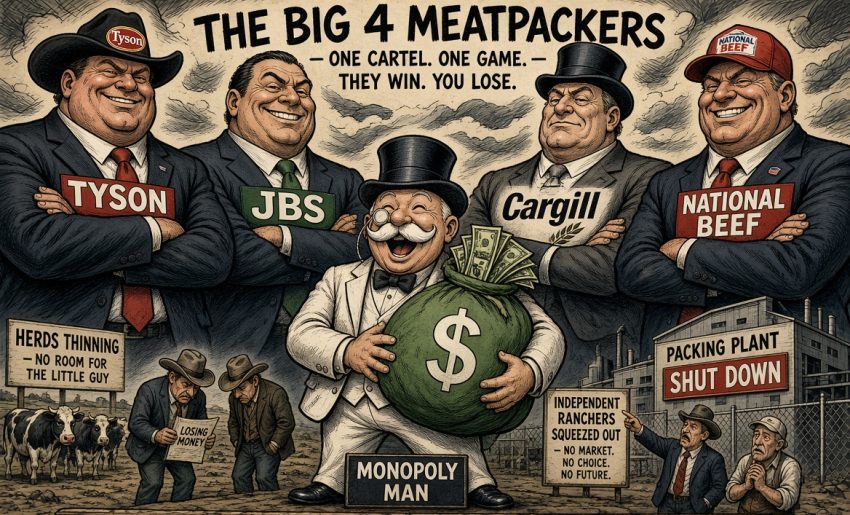
America’s cattle industry is stuck in a tough spot. The national herd remains near multi-decade lows. Ground beef prices sit at record levels just under $7 per pound. Consumer demand is starting to crack. At the same time, major packers keep closing plants and concentrating capacity. The latest moves by Tyson Foods, which is shutting facilities in Joslin, Illinois, and Eagle Mountain, Utah, while seeking a buyer for its Pasco, Washington plant, add to the pressure. These changes threaten to give packers even more leverage just when the industry needs ranchers to expand herds. Small farmers and ranchers take the biggest hit.
Record Prices Are Finally Cutting Demand
Americans kept buying beef through high prices for a long time. That is changing. Circana data shows beef sales volumes fell 0.3% in the 13 weeks through mid-July 2026, covering the peak grilling period around Memorial Day and the Fourth of July. Volumes rose about 5% in the same stretch of the previous two years.
USDA numbers put the average supermarket price for ground beef just below $7 per pound, a record high. The cattle shortage shows no quick end. Bank of America analysts, citing Oklahoma State University’s Derrell Peel, say the cattle cycle is unlikely to improve soon and prices will stay elevated at least through next year. Consumers facing high overall living costs are switching to cheaper proteins such as chicken and pork.
This drop in demand could help rebalance the market over time. In the short run, it means ordinary families are being priced out of a basic food item.
Consolidation Gives Packers More Power
The U.S. cattle inventory remains near its lowest levels in more than five decades, the result of years of drought, high input costs, and heavy liquidation of breeding stock. Rebuilding is slow. Heifers kept back for breeding do not produce finished cattle for several years. Yet packing capacity continues to shrink.
Tyson’s August 2026 plant closures follow earlier shutdowns, including the Lexington, Nebraska facility. The company is focusing operations on fewer sites in Dakota City, Nebraska; Holcomb, Kansas; and Amarillo, Texas. JBS has made similar cuts. The four largest firms, which are Tyson, JBS, Cargill, and National Beef, now control roughly 80-85% of U.S. beef processing capacity, far higher than decades ago when the share was closer to 25%.
DTN Livestock Analyst ShayLe Stewart notes that current capacity can handle today’s tight supplies. The bigger problem is longer term. Further consolidation increases packer leverage. When cattle numbers eventually rise, reduced processing space will pressure fed cash prices paid to producers. Ranchers understand this dynamic. Many will think twice about retaining heifers and expanding herds if the future payoff looks weaker. The incentive to rebuild is damaged at the exact moment expansion is most needed.
Packers say they are cutting excess capacity to stay profitable in a low-volume environment. Efficiency matters in a thin-margin business. The result, however, is fewer buyers for cattle, greater pricing power at the packing level, and a wider gap between what ranchers receive and what shoppers pay.
Small Farmers and Ranchers Feel the Squeeze
Independent cow-calf operators and smaller feeders face the sharpest effects. Fewer marketing options reduce competition for their cattle. When packers can shift volume among a smaller number of large plants, producers lose bargaining power. Rural towns also lose jobs when facilities close. Recent Tyson moves alone eliminated thousands of positions.
The cycle reinforces itself. High retail prices reduce demand. Tight supplies and concentrated packing keep producer returns uncertain. Ranchers hold back on expansion. The herd stays small longer. Prices stay high. Smaller operations, already dealing with drought, feed costs, and other pressures, scale back or exit. The number of cattle operations has fallen significantly over the past decade. Packing consolidation speeds that process by favoring larger operators who can work more easily with the dominant firms.
Some policy efforts have appeared, including bills aimed at meatpacker concentration and support for smaller processors, along with attention to imports and antitrust issues. Imports can provide temporary supply relief, but they do not fix the domestic processing bottleneck or rebuild the breeding herd. Real recovery still requires ranchers to see a clear path to profitable expansion. That path looks less certain with every plant that closes.
The Bottom Line
Record ground beef prices are already reducing consumer demand. Meat-packing consolidation is making the herd rebuild harder by creating long-term uncertainty for producers. Small farmers and ranchers sit in the middle, facing weaker market power and higher risks. Weather and costs caused much of the herd decline, but the concentration of packing capacity is now making recovery more difficult. Until more competitive processing options appear and ranchers gain clearer signals that expanded herds will bring solid cash returns, the industry remains stuck.