

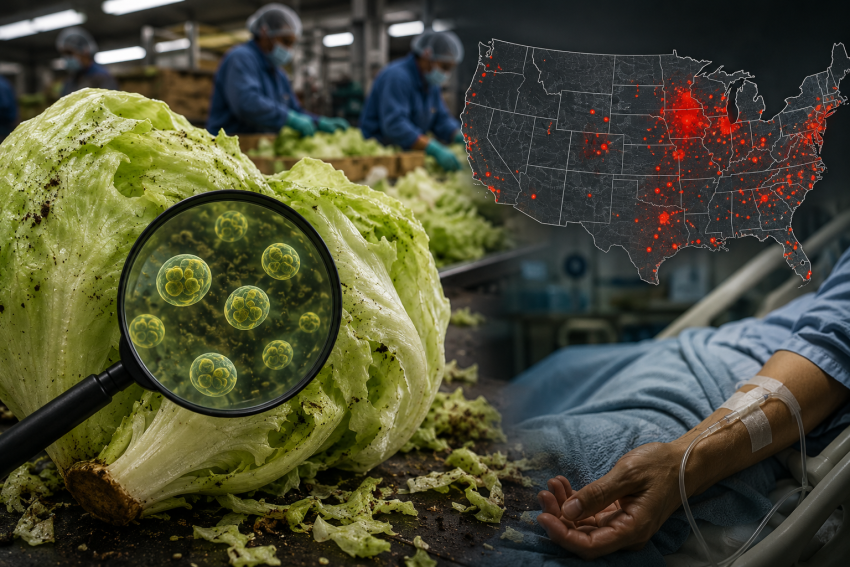
More than 10,000 Americans have been sickened, hundreds hospitalized, and at least two people have died in what has become the largest recorded Cyclospora outbreak in U.S. history.
Federal investigators have traced the largest cluster to shredded iceberg lettuce imported from central Mexico and distributed through Taco Bell and other foodservice channels. The outbreak has reignited debate over America’s reliance on imported produce, the challenges of detecting foodborne parasites, and whether the nation’s food safety system is keeping pace with an increasingly global supply chain.
As of early August 2026, the Centers for Disease Control and Prevention had confirmed more than 10,000 domestically acquired Cyclospora infections across dozens of states, with thousands of additional illnesses still under investigation. Michigan has reported the highest number of cases, and officials say dehydration contributed to the deaths of two people with significant underlying health conditions.
Cyclospora infections are rarely fatal, but they can be debilitating. Patients often experience weeks of severe watery diarrhea, abdominal cramping, nausea, fatigue, and weight loss. Unlike many foodborne illnesses that resolve within a few days, symptoms can persist for weeks without treatment.
Following the Trail
The investigation centered on shredded iceberg lettuce served through Taco Bell restaurants in several Midwestern states before expanding as additional cases emerged. FDA traceback efforts identified Taylor Farms de Mexico operations in Guanajuato as the common supplier. The company voluntarily withdrew iceberg lettuce sourced from central Mexico from the U.S. market, while Taco Bell, Sysco, and other distributors removed affected product from their supply chains.
Despite the strong epidemiological evidence linking illnesses to the lettuce, proving contamination in the product itself has proven far more difficult. One lettuce sample collected at the border initially tested positive before later being ruled a false positive. Mexican regulators reported negative results from water and facility samples, and the investigation remains open as officials continue examining additional illness clusters that may or may not be connected.
That distinction matters because Cyclospora is notoriously difficult to detect. By the time illnesses are reported and investigators identify a likely source, the contaminated produce has usually been consumed or discarded, leaving public health officials to rely heavily on patient interviews, purchasing records, and statistical analysis rather than positive laboratory tests.
How Does Human Waste End up on Lettuce?
Cyclospora is unusual because humans are its only known host. The parasite is shed in human feces, but it is not immediately infectious. It must spend days or even weeks in the environment before it becomes capable of infecting another person.
That means outbreaks almost always point back to contamination from human sewage or infected workers rather than livestock or wildlife. The parasite can reach lettuce through contaminated irrigation water, wash water, failing sanitation systems, inadequate restroom facilities, or poor hygiene during harvesting and processing. Overhead irrigation can deposit contaminated water directly onto leafy vegetables, while soil splash and processing equipment can spread contamination even further.
Once Cyclospora reaches leafy greens, consumers have few effective defenses. Washing lettuce helps remove dirt and some microorganisms, but it does not reliably eliminate the parasite. Because lettuce is typically eaten raw, there is no cooking step to destroy it before consumption.
Why So Much Imported Lettuce?
Although the United States grows most of the lettuce consumed domestically, imports from Mexico play an increasingly important role during seasonal gaps, particularly when production in California and Arizona slows. Mexico supplies the vast majority of imported lettuce entering the United States and is the nation’s largest foreign supplier of fresh fruits and vegetables overall.
The arrangement offers clear advantages. Consumers enjoy year-round availability and relatively stable prices, while retailers and restaurants can maintain consistent supplies regardless of growing conditions in the United States. Many American food companies also operate production facilities in Mexico, creating tightly integrated supply chains that blur the line between domestic and foreign production.
Those benefits, however, come with trade-offs. Every additional step between the field and the dinner plate introduces more opportunities for contamination while making investigations more complex when outbreaks occur. Inspecting farms, water systems, and processing facilities located outside the United States also presents practical challenges that do not exist with domestic production.
Cyclospora outbreaks linked to imported produce are not new. Previous investigations have implicated cilantro, basil, salad mixes, and other leafy vegetables from Mexico. While many shipments arrive safely every day, repeated outbreaks suggest that sanitation, agricultural water quality, and worker hygiene remain persistent vulnerabilities in some growing regions.
It is also important to recognize that imported produce is not uniquely responsible for foodborne illness. Domestic farms have experienced outbreaks involving leafy greens, onions, melons, and numerous other crops. Food safety risks exist throughout the agricultural system, regardless of where food is grown.
Could Stronger Oversight Have Prevented This?
The outbreak has renewed scrutiny of food safety oversight on both sides of the border.
The Food Safety Modernization Act requires importers to verify that foreign suppliers meet U.S. safety standards, but enforcement depends on inspections, audits, testing, and cooperation with foreign regulators. Critics argue that recent reductions in surveillance and staffing have made it harder to detect foodborne outbreaks quickly.
Among the most significant changes has been the scaling back of the CDC’s FoodNet surveillance program. FoodNet historically tracked eight major foodborne pathogens through an active network of state health departments, but recent changes reduced that number to two, making Cyclospora cayetanensis reporting optional for participating states rather than a core surveillance priority.
Federal expertise in parasitic diseases has also been reduced. Before the current outbreak, the CDC laboratory team dedicated to tracking parasitic illnesses reportedly declined from 11 specialists to just three. In addition, the Trump administration’s elimination of USAID removed an estimated $30 million to $40 million in funding that had supported collaborative CDC parasitic disease programs. Public health experts have warned that those changes left fewer specialists available to monitor emerging outbreaks and respond when they occur.
Administration officials counter that the nation’s core food safety functions remain intact and that resources have been prioritized where they can have the greatest impact. They also note that state health departments, CDC epidemiologists, and FDA investigators ultimately identified the likely source of this outbreak despite the technical challenges involved.
Cyclospora presents unique obstacles regardless of funding levels. Unlike bacteria such as Salmonella or E. coli, the parasite cannot be easily cultured in a laboratory, contamination may occur only in isolated areas of a field, and testing methods rely heavily on sophisticated molecular techniques and epidemiological investigation. By the time investigators know where to look, the contaminated produce has often already been consumed or discarded.
A Reminder of How Vulnerable the Food System Can Be
The outbreak also carried financial consequences. Taco Bell experienced a noticeable decline in customer traffic after news of the investigation spread, lawsuits have already been filed, and other distributors that handled the lettuce were forced to remove products from circulation.
Beyond those immediate impacts, the outbreak raises broader questions about how Americans balance affordability, year-round availability, and food safety. Importing produce from regions with favorable growing conditions keeps grocery prices lower and shelves stocked throughout the year, but it also increases dependence on supply chains that stretch across international borders and multiple regulatory systems.
No inspection program can eliminate every risk associated with fresh produce eaten raw. However, stronger water quality standards, improved sanitation, rigorous worker hygiene, better traceback technology, and sustained inspection capacity can all reduce the likelihood that contaminated food reaches consumers.
This outbreak will eventually fade from the headlines. Restaurants will change suppliers, recalls will end, and public attention will move elsewhere. The larger questions, however, are unlikely to disappear. As the United States becomes increasingly dependent on imported produce, the challenge is not simply preventing the next outbreak, but deciding how much risk consumers are willing to accept in exchange for inexpensive, year-round access to fresh food.