

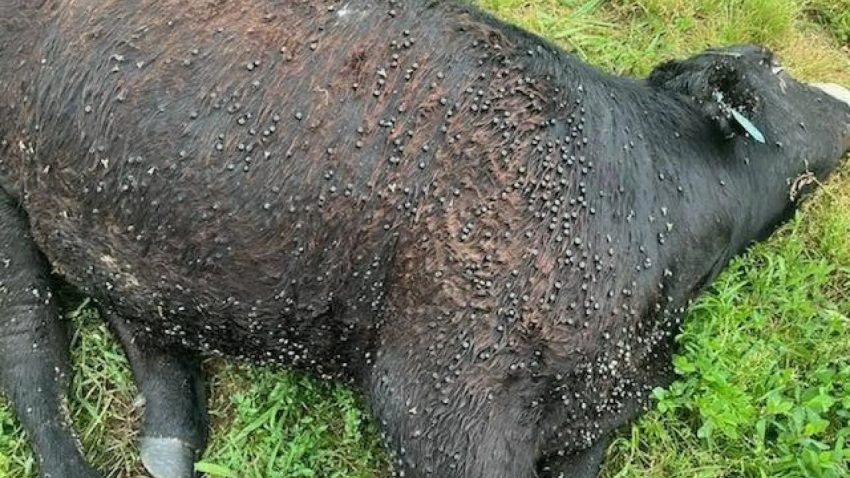
American cattle producers are already battling foreign market competition, New World Screwworm, drought, rising production costs, and alpha-gal syndrome from lone star ticks that turns consumers against red meat. Now a rapidly spreading invasive species adds another layer of pressure: the Asian longhorned tick (Haemaphysalis longicornis). This pest can explode in numbers almost overnight, overwhelm animals with massive infestations, and transmit a serious blood parasite.
In early June 2026, East Tennessee cattleman Travis Mundy experienced the threat firsthand, as reported by AgWeb. On a Saturday his pastures and cattle looked normal. By Monday, a healthy show heifer was dead and covered in ticks. Within days, two high-value embryo heifers were lost, and heavy pressure appeared across multiple farms spread over several miles.
Mundy described the sudden outbreak: “They exploded overnight.” A period of drought let pastures grow tall, followed by heavy rain and high humidity. That created ideal conditions for the ticks. Neighbors reported even heavier losses, with some operations losing seven or more head. Necropsies confirmed Theileria in affected animals.
Hidden Danger and Rapid Reproduction
Asian longhorned ticks hide effectively, especially under thick hair. Mundy and his team found 200 to 300 ticks in a single ear of some calves. Routine checks missed the scale of the problem until animals started dying.
What makes this tick especially dangerous is its biology. Females reproduce asexually through parthenogenesis. One female can lay up to 2,000 eggs without ever mating, allowing populations to surge in a single season once established. This invasive species, native to East Asia, has spread to more than two dozen states since its first detection in the United States in 2017. It infests livestock, wildlife, pets, and people.
The primary disease threat comes from Theileria orientalis (often the Ikeda genotype), a protozoan parasite transmitted by the tick. It infects red and white blood cells, causing anemia, weakness, reduced growth, lower milk production, and death in severe cases. Calves are particularly vulnerable. Infected cattle can become lifelong carriers. Antibiotics do not treat the parasite effectively.
Heavy tick loads alone can kill through blood loss and stress, independent of disease transmission.
Control Challenges and Producer Strategies
Standard parasite programs offer limited protection. Mundy had been using regular permethrin sprays, pour-ons, injectables, IGR minerals, and garlic products. The ticks still exploded. Quick follow-up treatments with pour-ons and injectables killed many visible ticks, but producers need layered approaches.
Mundy has added a tick vaccine (with doses already administered to his herd) and is testing new pour-on products used successfully in other countries. He stresses that no single tool will solve the problem.
Key management lessons from the outbreak include:
- Keep pastures clipped short. Ticks thrive in tall grass. Neighbors with closely grazed pastures saw far fewer problems.
- Return to fly tags. Mundy believes tags in ears could have reduced infestations in those areas.
- Monitor closely, especially after weather shifts from dry to wet.
- Work with veterinarians and universities for identification and testing. Mundy sent samples to the University of Tennessee for confirmation.
Broader Implications for American Cattle
This new pressure compounds existing challenges. Alpha-gal from lone star ticks already reduces demand for red meat among allergic consumers. Lyme and other tick-borne diseases affect both livestock and human health. Foreign animal disease risks and trade barriers remain constant concerns. An invasive tick that spreads quickly, resists simple control, and transmits a persistent parasite raises the stakes for herd health, genetics preservation, and profitability.
Producers across affected and at-risk regions should stay alert. Scout animals and pastures regularly. Report unusual tick activity or unexplained anemia to veterinarians and state officials. Early detection and aggressive integrated management offer the best defense as this invader continues its spread.
The Asian longhorned tick is not going away. Like other invasive threats, it demands vigilance, updated protocols, and industry coordination to protect American cattle herds.