

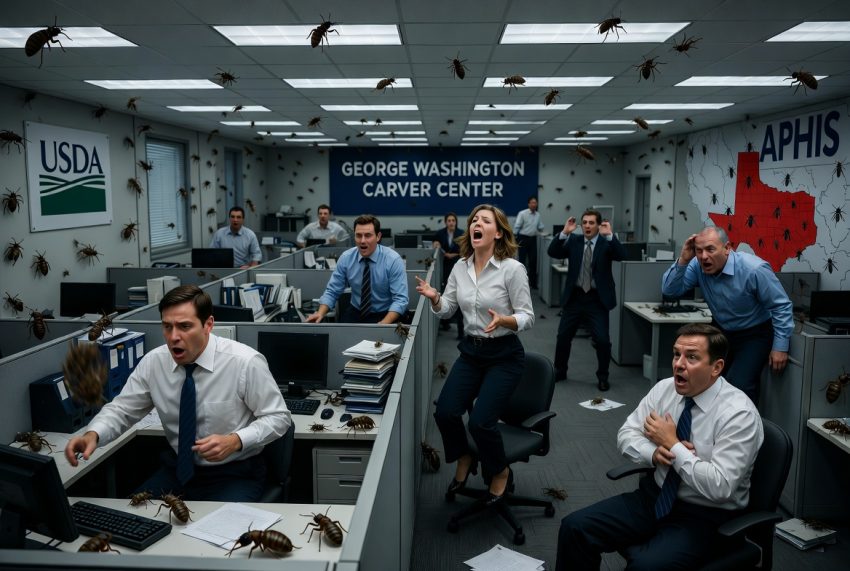
The U.S. Department of Agriculture confirmed on June 3, 2026, the first case of New World screwworm in domestic livestock in decades. Larvae infested the umbilical area of a three-week-old calf in Zavala County, Texas. This flesh-eating parasite, whose maggots burrow into living tissue of warm-blooded animals, poses a serious threat to cattle, wildlife, and potentially people.
The agency responsible for stopping invasive pests, APHIS (Animal and Plant Health Inspection Service), has been dealing with its own bedbug infestation at its headquarters in Beltsville, Maryland. Employees reported the problem in May, with fumigation efforts and frustration over return-to-office policies that risked spreading the bugs home.
This comes after years of warnings that the screwworm was advancing northward through Central America and Mexico. Ranchers, veterinarians, and Texas officials had urged stronger action at the border and in international programs. Instead, staffing and budget pressures at APHIS, appear to have left defenses thinner precisely when vigilance was most needed.
After extensive DOGE cuts, APHIS has shouldered significant staff reductions. Hundreds of workers involved in pest detection and crop protection accepted buyouts or left amid broader USDA efficiency efforts. Reports indicate APHIS lost a substantial portion of its workforce, with some estimates around 17-20 percent in key areas. This includes roles in surveillance, international coordination, and rapid response.
The sterile insect technique that eradicated screwworm from the United States in 1966 requires sustained investment in fly production, monitoring, and barrier zones. As the pest moved closer, critics say proactive capacity was reduced rather than reinforced. Texas Agriculture Commissioner Sid Miller criticized the response as slow and called for stronger federal action.
Federal priorities have drawn scrutiny. Hundreds of billions directed toward defending Israeli interests in the Middle East have left some wondering whether domestic agricultural security received enough focus. Ranchers in border states face the direct risk: potential losses to herds, higher veterinary costs, trade disruptions, and eradication expenses that could reach billions if the pest establishes. Texas cattle alone represent a $15 billion industry.
The bedbug situation at APHIS headquarters symbolizes deeper issues. An agency tasked with eradicating invasive species struggled to manage pests in its own building. Employees noted the distraction and the optics. If core operations face staffing shortages and internal disruptions, frontline biosecurity inevitably suffers.
USDA has now activated containment measures, including quarantines, surveillance, and sterile fly releases. Emergency funding and a Grand Challenge for new tools show a ramp-up in response. Yet many argue prevention should never have reached this point. Warnings were public and repeated.
American farmers and ranchers feed the nation and much of the world. Protecting them from preventable biological threats must rank as a core homeland priority. This screwworm case should serve as a clear signal: agricultural biosecurity cannot be an afterthought. Stronger funding, staffing, and focus on the home front are essential to safeguard rural economies and food security.