

Europe’s ambitious European Green Deal, launched in 2019 with the goal of making the continent climate-neutral by 2050, is facing significant setbacks. What began as a bold vision for sustainability has encountered economic realities, widespread farmer protests, and political pushback. For the agricultural sector, the impacts have been particularly severe, highlighting tensions between environmental targets and practical food production needs.
Impacts on Farmers
The Green Deal’s Farm to Fork and Biodiversity strategies imposed strict rules on emissions, land use, pesticides, and fertilizers. Targets included cutting pesticide use by 50 percent and expanding organic farming. These measures raised production costs and increased yield volatility, hitting small and medium-sized farms hardest.
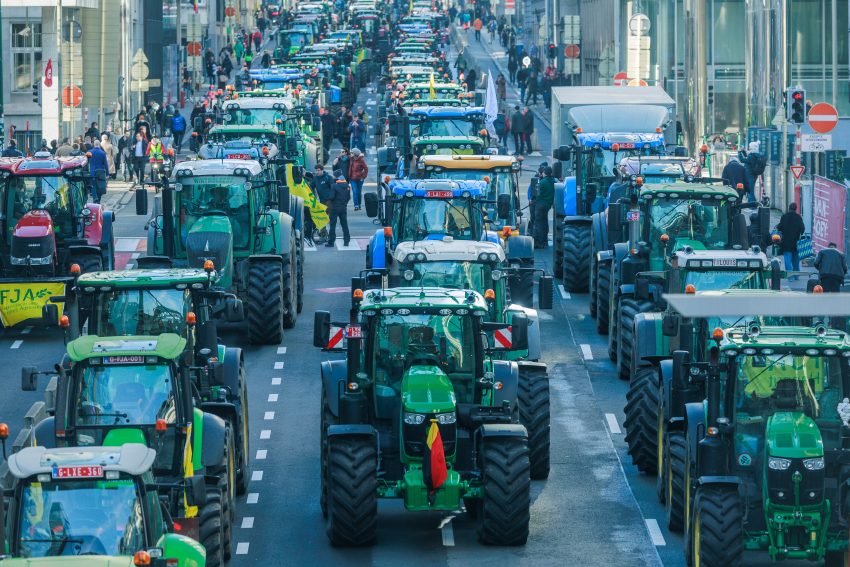
Farmers across Europe protested en masse in 2023 and 2024, with tractors blocking major cities and demonstrations continuing into 2025. Common grievances included burdensome regulations, low farm incomes, unfair competition from imports, and rising input costs. Many viewed the policies as prioritizing abstract climate goals over viable livelihoods and food security.
In response to the protests, the European Commission withdrew or diluted key proposals. The Sustainable Use of Pesticides Directive was voted down and withdrawn. Amendments to the Common Agricultural Policy (CAP) reduced some environmental ambitions. These rollbacks provided short-term relief but underscored the policies’ lack of feasibility for many producers.
Higher energy prices, partly driven by the shift to intermittent renewables and away from reliable sources, further strained farm operations. Energy-intensive inputs like fertilizers faced additional pressures from mechanisms such as the Carbon Border Adjustment Mechanism (CBAM), threatening further cost increases.
Broader Economic and Environmental Outcomes
The Green Deal’s effects extend beyond farms. Europe has experienced higher energy costs, with electricity prices two to three times higher than in the United States or China. Taxes make up nearly a quarter of these costs. This has accelerated deindustrialization, with industries facing carbon pricing and regulatory burdens.
The automotive sector offers a parallel warning, with the 2035 combustion engine ban contributing to job losses and reduced competitiveness. Overall, the transition demands massive annual investments, estimated at hundreds of billions of euros, equivalent to a significant portion of EU GDP.
Environmentally, results have been modest despite substantial spending. Europe accounts for only about 6 percent of global emissions, limiting the global impact of its unilateral approach. Centralized targets and rejection of technological neutrality, such as limiting options in vehicles or energy, have led to inefficiencies.
Protests and economic pressures contributed to shifts in the 2024 EU elections, where green parties lost ground. This political change accelerated the dilution of Green Deal elements, with Brussels softening regulations and sometimes avoiding the initiative’s name.
Where Things Go From Here
As of 2026, the Green Deal is in a phase of retrenchment rather than outright abandonment. The EU continues to pursue climate goals but with greater flexibility for member states and sectors. New CAP guidance for 2028-2034 emphasizes practical agri-environmental actions, aiming for measures that are effective and attractive to farmers.
Recent agreements seek to strengthen farmers’ positions in the food supply chain, addressing unfair trading practices and improving bargaining power against processors and retailers. This reflects a recognition that producer viability is essential for long-term sustainability.
For agriculture, the path forward likely involves balancing productivity with environmental stewardship through innovation, market-driven solutions, and targeted support rather than top-down mandates. Farmers have demonstrated resilience but need policies that reward efficiency and allow adaptation without threatening output.
The unraveling of the original Green Deal offers a cautionary tale. Rigid central planning struggled against real-world constraints in energy, industry, and farming. Future policies may succeed better by prioritizing technological neutrality, economic competitiveness, and genuine stakeholder input, ensuring Europe maintains both food security and environmental progress.
AgroWars will continue monitoring these developments as European agriculture navigates this evolving landscape.