

The American Farm Bureau Federation released sobering survey results this week. More than 5,700 farmers and ranchers polled between April 3 and April 11 report that roughly 70 percent cannot afford the fertilizer they need for the 2026 season. Southern growers are hit hardest at 78 percent, followed by the Northeast at 69 percent, the West at 66 percent, and the Midwest at 48 percent. Rice, cotton, peanut, and sorghum producers face the steepest shortfalls, with more than 80 percent unable to buy full supplies.
Rising input costs tied to the war in Iran and a strained farm economy are the stated culprits. Fertilizer prices have jumped more than 30 percent in key categories, while combined fuel and fertilizer expenses have climbed 20 to 40 percent. Many will skip applications or cut planted acres. The result will be lower yields, higher food prices, and tightening global supplies.
This is no minor market glitch. It strikes at the heart of American agriculture and world food security. Corn, soybeans, wheat, and rice all require affordable nitrogen, phosphorus, and potassium. Reduced applications mean sharply lower harvests. Scale that across major producing regions and the outcome is less food for a growing population.
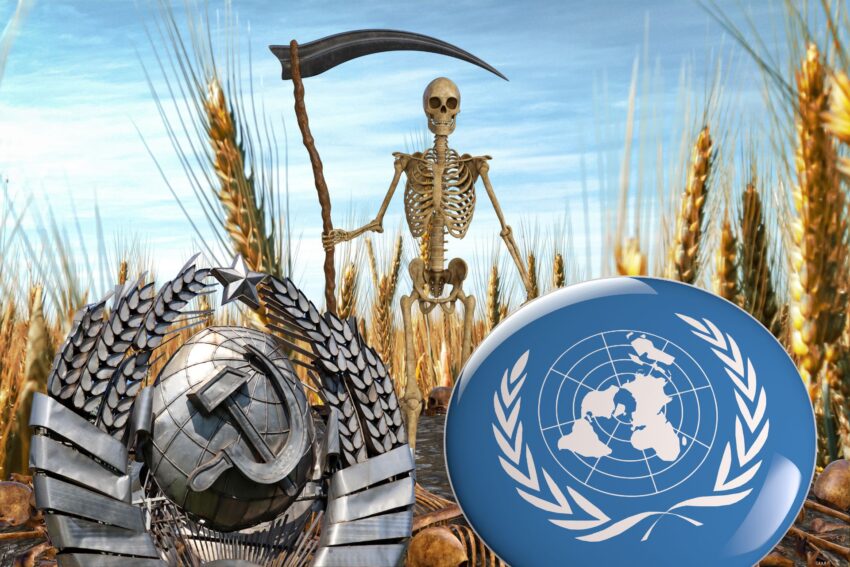
The real question AgroWars readers are asking is if this crisis is an accident of geopolitics and bad luck, or the first stage of a deliberate plan to trigger a worldwide Holodomor. The goal would be population reduction, an excuse for global government, and total consolidation of power and control. The classic formula is Problem-Reaction-Solution.
Problem: Engineered scarcity of fertilizer through conflict, sanctions, climate regulations, and market manipulation. Wars flare in key supply corridors. Prices spike and never fully retreat. Farmers on thin margins are forced to cut back.
Reaction: Crop shortfalls, food inflation, and spreading hunger. Empty shelves and desperate images dominate the news. Public fear grows and demands for decisive global action intensify.
Solution: A centralized world food authority emerges with emergency powers. Carbon permits, mandatory yield quotas, rationing, and population management programs arrive dressed as sustainability. The same interests that drove the shortages now dictate who grows what, where, and how much.
The parallel to Stalin’s Holodomor in Ukraine is unmistakable. That was no natural disaster. It was deliberate seizure of grain and engineered starvation to crush resistance. Millions died while Moscow denied the crisis. Today, the weapon is financial pressure and supply chokepoints aimed not at one region but at independent farmers everywhere.
Skeptics will dismiss this as conspiracy thinking. Yet the pattern is too consistent: fertilizer plants close under green rules, natural gas feedstocks face export bans, and flashpoints erupt exactly where trade routes are vulnerable. Global forums openly debate “sustainable population levels” and dietary shifts that require far less grain.
American farmers are the warning. If 70 percent cannot afford fertilizer this season, next year’s harvest shrinks, stocks tighten, and prices climb again. The cycle repeats until the public accepts the prepared solution.
Food is freedom. Whoever controls fertilizer controls the farm. Whoever controls the farm controls the food. Whoever controls the food controls the future.
The survey is not just bad news for planting season. It is a siren for anyone who still believes the global food system exists for abundance instead of engineered dependence. The Holodomor was not an accident. History may soon record that neither is this.