

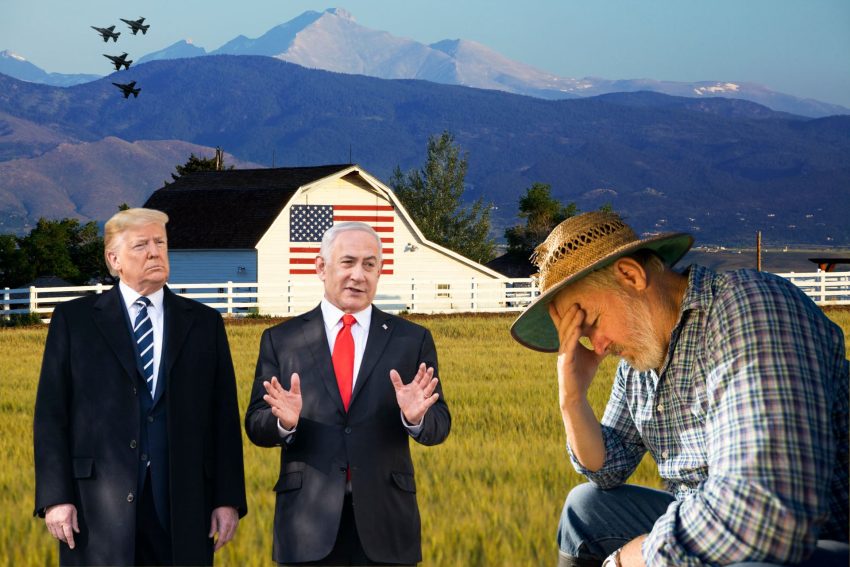
American farmers have grown accustomed to battling the elements, but nothing prepares them for the daily chaos now hitting commodity markets. Grain, fertilizer, and diesel prices have become a high-stakes roller coaster, with swings so sharp that every day and sometimes every hour brings fresh turmoil capable of wiping out months of careful budgeting. For the men and women who plant, harvest, and feed the nation, this volatility is more than an inconvenience. It is a direct threat to their ability to plan for the future.
The latest round of turbulence began when former President Trump declared victory in a major diplomatic breakthrough. It looked like diesel and fertilizer would begin flowing through the Strait of Hormuz again. Then, not too long after, Trump announced plans for decimating an entire civilization, which could be accurately described as a call for genocide, or at the very least, war crimes. There was even talk of nuclear weapons being used. The markets responded immediately. Diesel spiked as traders priced in potential supply disruptions, while fertilizer prices jumped on fears of prolonged conflict that could choke off key export channels.
With only hours to go before massive bombing raids began, Trump declared a ceasefire. Markets adjusted immediately, and many Americans breathed a sigh of relief. Farmers scrambled to adjust planting schedules and input purchases, recalculating break-even points on the fly. The ceasefire offered a narrow window of hope that stability might return.
That window slammed shut when Israel launched Operation Eternal Darkness, a campaign that targeted civilians in the capital of Lebanon. Reports of widespread destruction in Beirut sent shock waves through energy and agricultural markets. Iran responded by closing the Strait of Hormuz once again, halting the flow of oil that powers global diesel supplies and fertilizer production. Within minutes, grain prices reversed again, fertilizer costs climbed toward record territory, and diesel at the farm gate became a daily guessing game. Truckers and equipment operators watched pump prices fluctuate in real time, forcing many to idle machinery or reroute hauls to conserve fuel.
This pattern of announcement and counter-announcement has left producers exhausted. They could update your spreadsheets three times a day, and the numbers would still be wrong by supper.
The name Operation Eternal Darkness strikes a particularly sour note for those who rise before dawn to work in the sun. Farmers understand the value of light. They rely on it for photosynthesis, for drying crops, and for the simple optimism that comes with a clear sky over healthy fields. A military operation bearing that title feels like an insult to the very rhythm of their labor. It underscores a deeper concern: American agriculture needs open markets and reliable supply chains far more than it needs foreign entanglements that prioritize destruction over diplomacy.
The men and women who grow the crops that fill dinner tables and fuel ethanol plants are asking for something straightforward. They want a government that puts their needs ahead of distant conflicts. They want policies that keep fertilizer plants running, diesel flowing, and grain markets open to fair competition. They want an end to the cycle where one headline can erase a season of profit or turn a careful hedge into a costly mistake.
Until that happens, farmers will continue riding the roller coaster. They will check futures prices before breakfast, adjust orders before lunch, and second-guess every decision before bed. The land still needs planting. The bills still need paying. But the constant swings in grain, fertilizer, and diesel prices make intelligent planning nearly impossible. For an industry built on patience, foresight, and faith in the seasons, the current geopolitical storm is testing all three to the breaking point.