

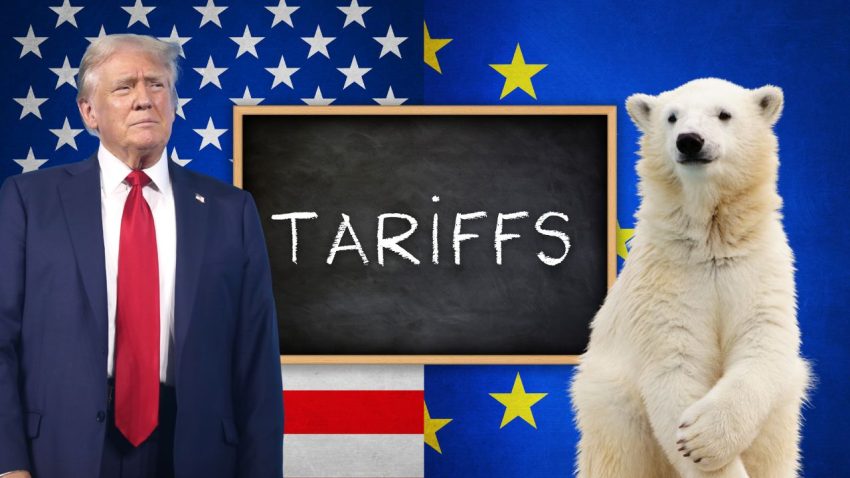
In the escalating geopolitical tensions over Greenland, American farmers find themselves once again caught in the crossfire of international trade disputes. President Donald Trump recently threatened to impose tariffs on eight European countries – Denmark, Norway, Sweden, France, Germany, the United Kingdom, the Netherlands, and Finland – unless they facilitate the U.S. acquisition of the Arctic island. This has prompted swift responses from Europe. The European Union is now considering retaliatory measures, including a package of tariffs worth approximately €93 billion on U.S. goods, which could significantly impact American agriculture and commodities.
This €93 billion retaliatory tariff package, originally prepared in response to earlier U.S. trade actions but suspended after a tentative agreement last summer, targets a range of U.S. exports, including industrial goods and agricultural products. For American farmers, this revival could mean higher duties on key commodities shipped to the EU market, exacerbating existing challenges in an already volatile sector. Soybeans, a staple of U.S. exports, are explicitly mentioned in discussions of the hit list, alongside other agricultural items. Historically, EU retaliatory tariffs have zeroed in on politically sensitive U.S. products, such as bourbon, peanut butter, orange juice, and cranberries, to maximize pressure on key states and industries.
The immediate effects on American farmers could be profound. The EU is a major destination for U.S. agricultural exports, accounting for billions in annual sales. Imposing tariffs would make these products less competitive in European markets, leading to reduced demand and potential surpluses back home. For soybean growers in the Midwest, who have already navigated trade wars with China in recent years, this could translate to depressed prices and squeezed profit margins. Pork and beef producers might face similar hurdles, as higher costs deter European buyers, forcing farmers to seek alternative markets or absorb losses. In a sector where margins are often razor-thin, these disruptions could lead to farm closures, reduced planting, and broader economic ripple effects in rural communities.
Beyond specific commodities, the broader commodity markets could see increased volatility. Corn, wheat, and dairy would add to the uncertainty if included in the expanded tariffs. Commodity futures might fluctuate wildly as traders anticipate the tariffs’ implementation, potentially starting as early as February if diplomatic efforts fail. This comes at a time when global supply chains are still recovering from pandemic measures, weather events, and geopolitical shifts, making any additional trade barriers particularly unwelcome.
Amid these threats, a dose of stability would be a welcome relief for American agriculture. Farmers have endured a relentless series of upheavals: erratic weather patterns and natural disasters, fluctuating input costs from fertilizers to fuel, and policy swings with each administration. The ground feels perpetually unstable, with one crisis morphing into the next. Resolving the Greenland dispute through negotiation rather than escalation could prevent these tariffs from materializing, allowing farmers to focus on production rather than protectionism. As leaders convene at forums like Davos this week, the hope is for dialogue that restores predictability to trade relations. In an industry vital to America’s food security and economy, a bit of calm could go a long way toward steadying the ship.