

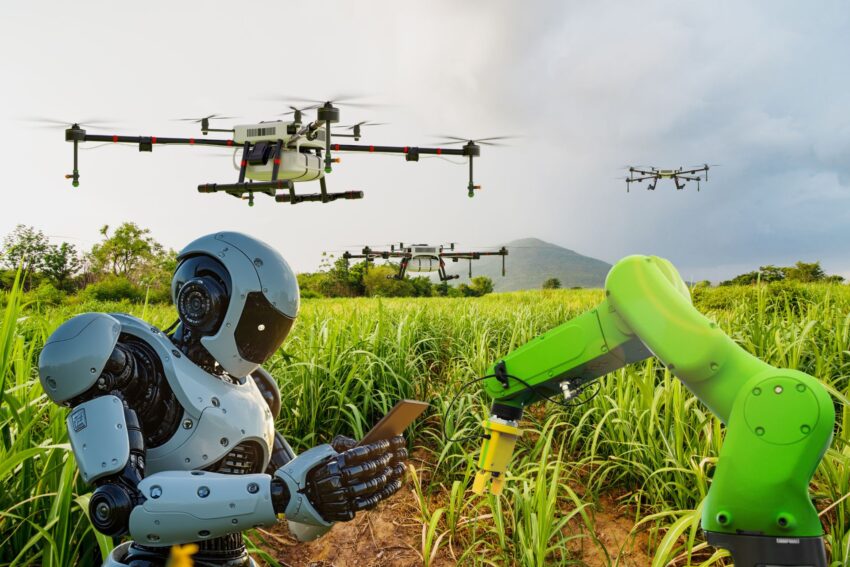
The latest advancements in farming technology appeared prominently at CES 2026. Kubota showcased its KVPR, a versatile robot capable of expanding, contracting, and moving in multiple directions. This kind of equipment represents the future of agriculture, where automation, artificial intelligence, and precision tools are changing how food is produced. These innovations offer real help to farmers facing difficulties, but they also raise serious questions about the long-term future of family farming and rural communities.
The Exciting Side of Modern Farming Technology
Farming has always required hard work and smart problem-solving. Today’s technologies are making it more efficient and less physically demanding. Precision agriculture uses AI, satellite data, and sensors to track soil conditions, weather, and crop performance in real time. This approach helps farmers decide exactly when and where to apply water, fertilizer, or pesticides. This saves a great deal on input costs.
Drones identify pests from above, while autonomous tractors handle tasks like mowing and planting with minimal human input. Many of these machines include features such as obstacle detection and voice control. For family farmers, equipment that switches attachments automatically saves hours of manual labor and allows more focus on planning and management.
The timing could not be better. American agriculture faces a persistent labor shortage. In 2025, the sector lost 155,000 workers, and more than half of farmers report ongoing difficulty finding help. An aging workforce and changing immigration patterns have made the problem worse. Robotic harvesters, smart irrigation systems, and automated equipment can fill these gaps. Some systems reduce water use by 40 to 60 percent and cut labor costs by up to 25 percent.
In 2026, additional trends include AI agents that predict outcomes, connected Internet of Things devices on machinery, and technologies for carbon farming. When used well, these tools increase yields, lower costs, and help farmers stay competitive in challenging markets.
The Potential Downsides
Despite the benefits, important concerns remain. Will advanced technology eventually eliminate the need for human farmers? Past waves of mechanization already reduced farm employment significantly and contributed to rural population decline. Current automation could speed up that trend in an industry where many positions are already hard to fill.
A deeper worry involves the current economic pressures on farmers. Low crop prices, high input costs, and labor shortages have created difficult conditions. Some observers ask whether these challenges are being allowed to worsen in order to push family farmers to sell land that has been in their families for generations.
Private equity firms have increased their purchases of American farmland. Investment in the sector grew substantially in recent years, with large players acquiring thousands of acres and leasing the land back to operators at higher rates. Farmland is viewed as a stable asset with attractive returns. Rising land prices make it harder for smaller farmers to expand or pass operations to the next generation, leading more of them to sell.
Large agricultural companies, equipped with robots and AI, could then operate these consolidated properties with almost no human workers. Driverless trucks would transport goods from fields managed by automated systems. Early versions of such operations already exist, and interest in full automation has grown quickly.
Effects on Rural America
If this pattern continues without checks, rural America could face major changes. Automation and corporate ownership might accelerate population loss, turning active communities into nearly empty areas. When family farms disappear, local schools, businesses, and services often close as well.
The countryside could eventually consist mainly of robots working fields, large solar installations powering data centers, and autonomous vehicles moving products with little human presence. Technology companies are already competing for rural land to build infrastructure, sometimes outbidding traditional farmers.
A Balanced Future
Technology does not have to lead to this outcome. Family farms can adopt new tools in ways that strengthen rather than replace human operators. Many younger farmers already use drones, data analytics, and automation to improve efficiency while maintaining personal involvement.
Supportive policies could make advanced equipment more affordable for smaller operations, reform labor rules to ease shortages, and limit predatory land purchases. Family farms remain essential for resilient food systems, local knowledge, and community stability.
Agricultural technology holds great potential to make farming more economically sustainable and less burdensome. The key question is whether it will serve as a partner to family farmers or become a mechanism for replacing them. The future of rural America depends on the choices made now.