

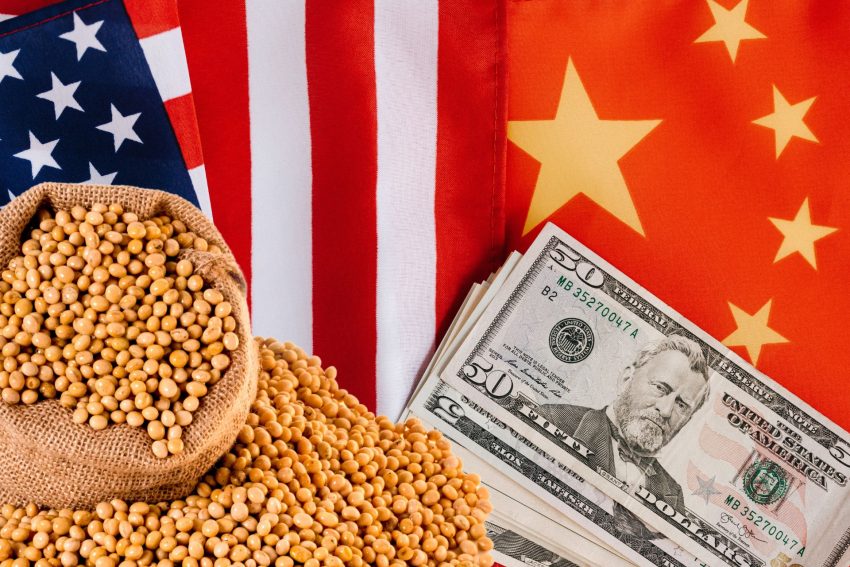
In the volatile world of agricultural commodities, few stories capture the tension between geopolitics and grain bins like the U.S.-China soybean saga. As of December 2025, American farmers are pinning hopes on a fragile trade truce forged in late October between Presidents Donald Trump and Xi Jinping during their summit in Busan, South Korea. The deal includes a commitment from Beijing to purchase at least 12 million metric tons of U.S. soybeans by the end of the year, followed by a minimum of 25 million tons annually through 2028. This pledge has sparked a modest rally in soybean futures, with Chicago Board of Trade prices climbing to nearly $11 per bushel, the highest in over a year. Yet, as harvest wrapped up and elevators filled, whispers in the heartland question if these buys will truly materialize or if they represent little more than diplomatic posturing. With just weeks left, the clock is ticking, and the stakes could not be higher for Midwest growers.
2/2 "#China is expected to step up US #soybean purchases to meet a pledge to buy at least 12 million tons by the end of the year, according to multiple traders" while "76% of economists surveyed say China won’t purchase that amount of soybeans this year."https://t.co/lj6WVgXWIx
— FarmPolicy (@FarmPolicy) December 2, 2025
The Backdrop: From Boom to Bust and Back Again
Soybeans have long been the canary in the coal mine for U.S.-China trade relations. Before the latest flare-up of tariffs and retaliatory measures earlier this year, China imported nearly 27 million tons of American soybeans in 2024, accounting for roughly half of total U.S. exports. This demand fueled a lot of soybean planting by farmers, with exports topping $12 billion annually. But tensions escalated in mid-2025, leading to a near-total halt in purchases. From June through August, U.S. shipments to China dropped to virtually zero, while Brazil shipped 2.5 billion bushels in the same window. Through August, total U.S. soybean exports to China stood at a dismal 218 million bushels, a sharp plunge from 985 million the prior year.
The Busan agreement aimed to reverse this slide. U.S. Treasury Secretary Scott Bessent hailed it as a “meaningful step forward,” noting China’s pledge covers the current marketing season through January and extends long-term stability. The White House fact sheet clarified the timeline: 12 million tons in November and December alone, on top of roughly 6 million tons shipped earlier in 2025. If met, this would bring yearly totals to about 18 million tons, a 32 percent drop from 2024 but a lifeline compared to the 2018 trade war lows of 8 million tons. Additional commitments include resuming imports of U.S. sorghum and hardwood logs, plus suspending tariffs on beef, pork, dairy, wheat, corn, and cotton.
Signs of Momentum: Purchases Pick Up, But Pace Lags
Recent weeks offer a mix of encouragement and caution. In late November, following a Trump-Xi phone call, China snapped up at least 10 cargoes of U.S. soybeans worth $300 million, each around 60,000 to 65,000 tons, for January delivery from Gulf Coast and Pacific Northwest ports. Days later, state-owned giant COFCO bought another 14 cargoes, totaling over 840,000 tons for December and January shipments. These moves, the largest since January, pushed futures higher and drew praise from the American Soybean Association, whose president called it a path to “stable, long-term trading.”
Traders remain cautiously optimistic. As of early December, Bloomberg reports suggest state importers like COFCO will ramp up bookings in the coming weeks to hit the 12-million-ton target. U.S. Agriculture Secretary Brooke Rollins echoed this, stating on social media that purchases are “on track” after tariff suspensions. Over the past decade, November-December exports to China have averaged 9.5 million tons, making the goal ambitious but feasible.
Yet, the numbers tell a starker story. USDA data shows only about 3 million tons booked so far against the pledge. A 13 percent tariff on U.S. soybeans persists, rendering them pricier than Brazilian alternatives, where China recently secured 20 cargoes at lower rates. Purchases stalled briefly in mid-November, fueling doubts. Analysts at BMI predict Beijing may “slow-roll” buys to prolong negotiations, using soybeans as leverage amid broader tensions over semiconductors and rare earths. A survey of economists found 76 percent believe China will fall short this year, citing bureaucratic hurdles and ample stockpiles from South America.
Want to know how bad Donald Trump is losing his trade war with China?
Last month, he said China will buy 12 million tons of US soybeans by January. China hasn’t even bought 1/10th of that amount yet.
Trump is getting played by China while American farmers pay the price.
— Debbie (@DebbieSVA) December 1, 2025
Skeptics’ Case: Diversification and Doubt
Not everyone buys the optimism. Critics point to China’s decade-long shift away from U.S. dependence. Beijing’s food security push has diversified suppliers, with Brazil and Argentina now dominating imports that hit record highs in 2025. Even if the pledge holds, 25 million tons annually falls 14 percent below the 2020-2024 average of 29 million tons. House Agriculture Committee Democrats highlighted this on social media, noting “no incentive” for China to prioritize pricier American beans while Trump’s tariffs linger.
China has plenty of soybeans from Brazil and Argentina. American soybeans remain more expensive because of Trump’s tariffs. There's no incentive for China to buy from us right now. This is what happens when trade wars replace trade policy.
— House Agriculture Committee Democrats (@HouseAgDems) November 30, 2025
Farm groups like the American Farm Bureau Federation urge diversification into Southeast Asia and Africa, where deals for 19 million tons are in play but lack firm timelines. On X, ag commentators question the sales’ reality, with one noting grain companies’ incentive to downplay buys to keep farmer prices low. Broader sentiment reflects wariness: Vanguard recently stripped China from its emerging markets fund, citing “broken promises” like past soybean shortfalls.
If the Shipments Falter: A Recipe for Pain
Should China miss the mark, the fallout could be swift and severe. Soybean prices, buoyed by truce hopes, would likely crater, erasing recent gains and squeezing margins already hit by high input costs and low Mississippi River levels jacking up transport fees. Total 2025 exports to China at under 10 million tons would mark the worst since 2018, amplifying a trade deficit and farm income crunch. Producers in states like Iowa and Illinois, where soybeans generate billions, face delayed payments, forced storage, and potential defaults on loans.
Longer term, repeated letdowns erode trust, pushing farmers toward cover crops or rotation shifts. Government aid, like the billions disbursed in prior trade wars, might return but cannot fully offset lost markets. Globally, Brazil benefits most, solidifying its export throne and pressuring U.S. competitiveness. As one trader put it, “Soybeans are a bargaining chip,” and if Beijing blinks, American growers pay the ante.
Looking Ahead: Truce Holding or Temporary Thaw?
As December dawns, the soybean pledge teeters between promise and peril. Concrete buys in November signal intent, and traders bet on a year-end surge to salvage the truce. But with tariffs biting, stockpiles overflowing, and history of selective fulfillment, skepticism lingers. For U.S. farmers, the real test is not words from Busan but tons in holds. If China delivers, it could stabilize a key export lane and quiet the heartland’s grumbles. If not, it underscores a harsh truth: in the great game of global ag, pledges are plentiful, but payloads are precious. AgroWars will keep watch as the bins empty and the barges load, or don’t.